Stadium Tech, Venue Monetization, and the New Arms Race in Sports Infrastructure
Venue operators, leagues, and clubs are accelerating investments that turn stadiums into data-rich, revenue-generating platforms rather than single-purpose buildings. From LED and Wi-Fi upgrades to premium clubs, experience centers, and new stadium deals, the latest moves show how technology and hospitality are becoming central to competitive advantage.
STADIUM TECHNOLOGY NEWS
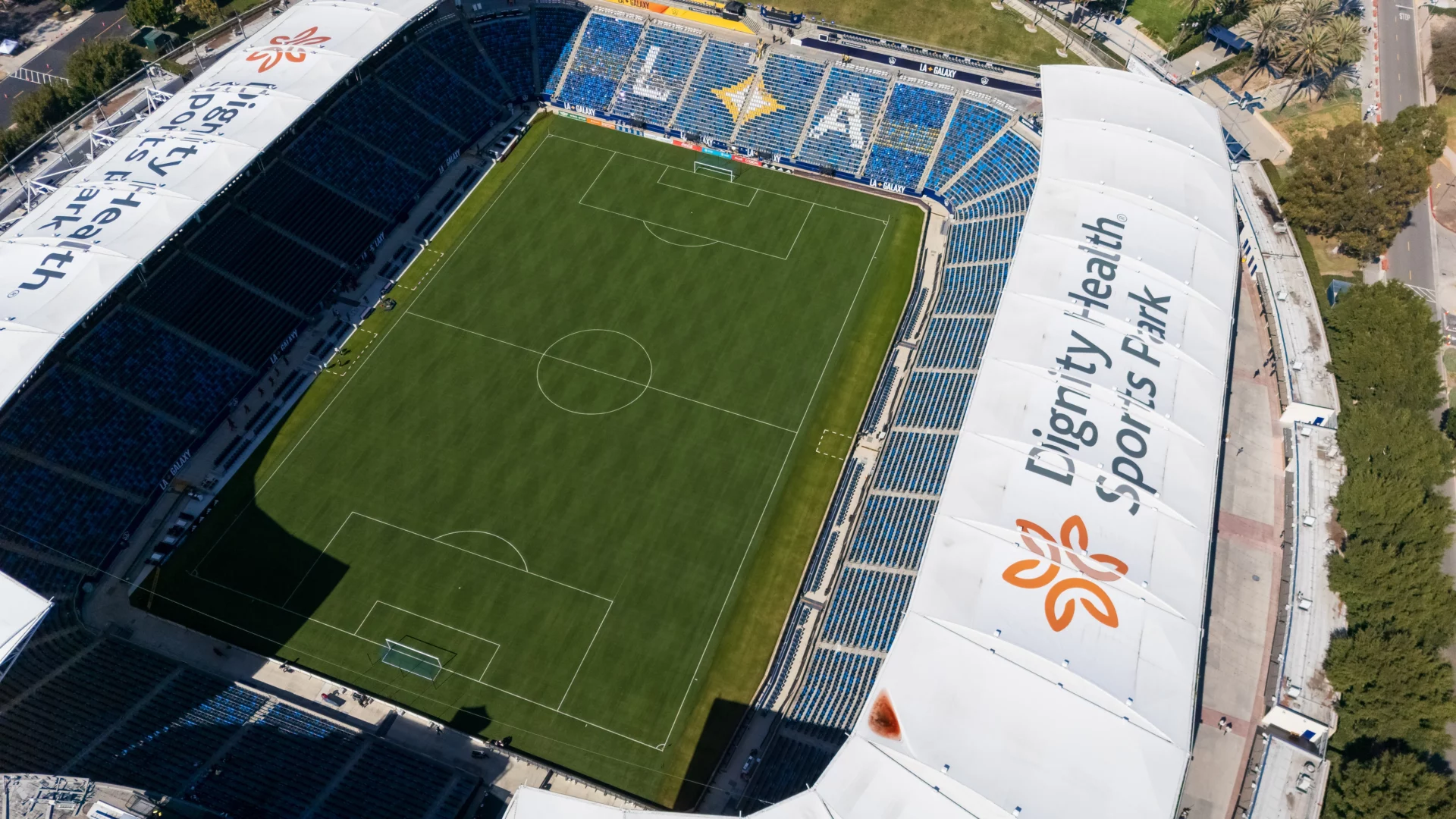
Dignity Health Sports Park upgrades LED display and show control system to enhance matchday production
Dignity Health Sports Park has installed a higher-resolution north-end LED video board and completed a venue-wide Show Control and Camino upgrade, signaling a broader shift toward more agile, data-driven live event production. For a venue that hosts LA Galaxy matches and more than 70 events annually, the investment is about more than aesthetics: it improves content flexibility, live data presentation, and operational efficiency while reusing existing infrastructure to limit waste and control costs.
MatSing to debut new high-capacity Wi-Fi 6E Lens Antenna at MWC in Barcelona
MatSing is set to unveil its MS-16.16W45 WiFi Antenna at MWC Barcelona, positioning the product for high-density environments where connectivity has become a core revenue and fan-experience requirement. The pitch is straightforward: deliver stronger Wi-Fi 6E performance with fewer antennas, enabling stadiums and arenas to scale capacity without layering in as much physical infrastructure.
MLB’s Automated Ball-Strike system forces a major shift in broadcast and game technology
Major League Baseball’s Automated Ball-Strike challenge system for the 2026 season is doing more than changing officiating. It is also forcing broadcasters and venue operators to redesign graphics and display workflows so strike-zone data can be presented without giving clubs an advantage during challenges, underscoring how rule innovation now ripples through production, technology, and in-game content strategy.
STADIUM PROJECT NEWS
Indiana takes major legislative step in bid to lure Chicago Bears across state line
Indiana’s unanimous approval of an amendment to create a stadium authority near Hammond marks a significant escalation in the regional competition to secure an NFL franchise. The move reflects a growing reality in modern sports economics: public policy, infrastructure finance, and team relocation strategy are increasingly intertwined, with states willing to compete aggressively for the long-term economic impact of a marquee venue.
Mets break ground on $60M player development complex in Port St. Lucie
The New York Mets have started construction on a 55,000-square-foot player development complex in Port St. Lucie, representing a major capital investment in performance infrastructure. Beyond upgrading training and recovery operations, the project reinforces the club’s Florida footprint through a long-term lease strategy and shows how teams are using facility spending to support both on-field development and regional business continuity.
Medellín advances $205M modernization of Atanasio Girardot Stadium
Medellín’s approval of a US$205 million redevelopment of Atanasio Girardot Stadium reflects the growing global premium on modern, event-ready venues. The planned roof, expanded capacity, hospitality enhancements, and surrounding public-space upgrades are designed to position the 1953 stadium for international competitions while unlocking broader urban and tourism value.
STADIUM BUSINESS NEWS
Kansas adds year-round premium social club inside historic Allen Fieldhouse
The University of Kansas and Oak View Group are turning Allen Fieldhouse into a year-round asset with the introduction of the members-only Naismith Club. The strategy reflects a larger industry trend: premium spaces are no longer reserved for game day alone, but are being repurposed to generate recurring hospitality revenue, deepen donor relationships, and keep iconic venues active across the calendar.
Chicago Fire FC opens $6M Experience Center to drive premium sales ahead of new stadium
Chicago Fire FC’s new $6 million Experience Center is a sales engine disguised as a fan-facing showcase, built to accelerate premium inventory sales ahead of the club’s planned downtown stadium. By allowing prospective buyers to preview suites, hospitality products, and technology concepts before construction is complete, the club is using immersive retail-style marketing to de-risk future revenue and build momentum around its privately funded venue plan.
LAFC–Inter Miami Match draws second-largest crowd in MLS history
LAFC’s matchup against Inter Miami at the Los Angeles Memorial Coliseum drew 75,673 fans, delivering the second-largest attendance in MLS history. The number illustrates the commercial power of marquee stars and destination events, and it suggests that MLS clubs can increasingly scale select matches into large-venue spectacles with major ticketing, sponsorship, and media upside.
Why It Matters
Venue operators, leagues, and clubs are accelerating investments that turn stadiums into data-rich, revenue-generating platforms rather than single-purpose buildings. From LED and Wi-Fi upgrades to premium clubs, experience centers, and new stadium deals, the latest moves show how technology and hospitality are becoming central to competitive advantage.
Content Package
Sports infrastructure is in overdrive: higher-res LEDs + smarter show control, Wi‑Fi 6E for dense venues, and MLB’s automated ball-strike reshaping broadcast workflows—while states and clubs escalate stadium bets.
#StadiumTech#SportsInfrastructure#VenueMonetization#FanExperience#WiFi6E#SportsBusiness
The “stadium arms race” is no longer just about bigger screens or more seats—it’s about monetization-ready infrastructure, faster production, and tech that turns game-day into year-round revenue. Here’s what stands out in the latest Stadium Tech Report: 1) Matchday production gets more agile (and more data-driven) Dignity Health Sports Park upgraded its north-end LED board and completed a venue-wide Show Control and Camino upgrade. For a venue hosting LA Galaxy matches and 70+ events annually, the payoff isn’t aesthetic—it’s operational flexibility, better live data presentation, and improved efficiency by reusing existing infrastructure. 2) Connectivity is becoming a core revenue requirement MatSing’s upcoming Wi‑Fi 6E Lens Antenna launch targets high-density environments where fans expect seamless experiences. The business implication: stadiums and arenas can scale capacity with less physical infrastructure layering—reducing complexity while improving performance. 3) Rule innovation ripples through broadcast and in-stadium content MLB’s Automated Ball-Strike system for 2026 will force changes to graphics and display workflows. The key: strike-zone data must be presented in a way that doesn’t create competitive advantage during challenges—highlighting how officiating tech now drives production strategy. 4) Stadium competition is increasingly policy-driven Indiana’s legislative move to create a stadium authority near Hammond underscores how relocation strategy, public financing, and team acquisition are converging. This is a new standard in sports economics: states will compete aggressively for long-term economic impact. 5) Premium and experience spaces are shifting from “game day” to recurring revenue - Kansas and Oak View Group’s Naismith Club inside Allen Fieldhouse turns an iconic venue into a year-round asset. - Chicago Fire FC’s $6M Experience Center acts as a sales engine ahead of a new downtown stadium—letting premium buyers preview suites, hospitality products, and tech concepts before construction is complete. 6) Destination events keep proving the ROI LAFC vs. Inter Miami at the LA Memorial Coliseum drew 75,673, the second-largest MLS crowd in history—reinforcing that marquee stars can transform select matches into large-venue spectacles with major ticketing, sponsorship, and media upside. Bottom line: the winners in the next cycle won’t just build venues—they’ll build platforms: production-ready, connectivity-first, monetization-aware, and policy-smart. #StadiumTech #SportsBusiness #VenueInnovation #FanExperience #SportsInfrastructure
#StadiumTech#SportsInfrastructure#VenueMonetization#FanExperience#WiFi6E#SportsBusiness
Stadiums are evolving fast: smarter LED show control, Wi‑Fi 6E for high-density crowds, and MLB tech changing how strike-zone data hits screens. Plus, premium clubs + experience centers = recurring revenue. 🏟️⚡️ #StadiumTech #VenueTech #WiFi6E #SportsInnovation #FanExperience #SportsBusiness #LEDDisplay #MLB
#StadiumTech#SportsInfrastructure#VenueMonetization#FanExperience#WiFi6E#SportsBusiness
From upgraded LED/video production systems to next-gen Wi‑Fi 6E connectivity, sports venues are investing in tech that improves matchday operations and monetization. MLB’s Automated Ball-Strike program also signals a major shift in broadcast graphics and in-game workflows. Meanwhile, stadium competition keeps heating up—states and clubs are using policy tools and premium experience spaces to secure long-term revenue. What’s the biggest infrastructure upgrade you think will matter most in 2026?
#StadiumTech#SportsInfrastructure#VenueMonetization#FanExperience#WiFi6E#SportsBusiness
In 30 seconds, here’s why sports venues are in an arms race. 🏟️ 1) Dignity Health Sports Park upgraded its north-end LED board and show control—so matchday production is faster, more flexible, and more data-driven. 2) Connectivity is now monetization. MatSing is debuting a high-capacity Wi‑Fi 6E antenna for dense stadium environments—fewer antennas, better performance. 3) MLB’s Automated Ball-Strike system changes more than officiating. It forces broadcasters and venues to rethink strike-zone graphics so it can’t advantage clubs during challenges. 4) And on the business side: states and teams are escalating stadium bets—with premium clubs and experience centers turning venues into year-round revenue engines. So the question is: will your venue be built for game day… or for the entire business calendar?
#StadiumTech#SportsInfrastructure#VenueMonetization#FanExperience#WiFi6E#SportsBusiness
Sports infrastructure is evolving fast—and it’s about more than aesthetics. 🏟️ In this week’s Stadium Tech Report highlights: 1) Dignity Health Sports Park upgraded its LED display and venue show control—making live production more agile and operationally efficient. 2) MatSing is bringing a new high-capacity Wi‑Fi 6E antenna to MWC—because connectivity is now a fan-experience requirement and a scalability advantage. 3) MLB’s Automated Ball-Strike for 2026 will reshape broadcast and display workflows, proving that rule tech drives production strategy. 4) On the business front, premium spaces are going year-round: Kansas’ Naismith Club and Chicago Fire’s Experience Center are built to drive recurring hospitality and future premium sales. Bottom line: the next wave of stadium winners will be tech-first, monetization-ready, and built for continuous events—not just kickoff. What upgrade do you want to see next?
#StadiumTech#SportsInfrastructure#VenueMonetization#FanExperience#WiFi6E#SportsBusiness