Venue Tech Is Becoming Core Infrastructure as Clubs Turn Connectivity, IP Control, and District Development Into Business Assets
Sports venues are no longer being treated as standalone facilities; they are becoming revenue-generating infrastructure built to support content, connectivity, and long-term real estate value. From IP-based production control centers to mixed-use stadium districts, clubs are using technology and development strategy to create assets that can scale beyond game day.
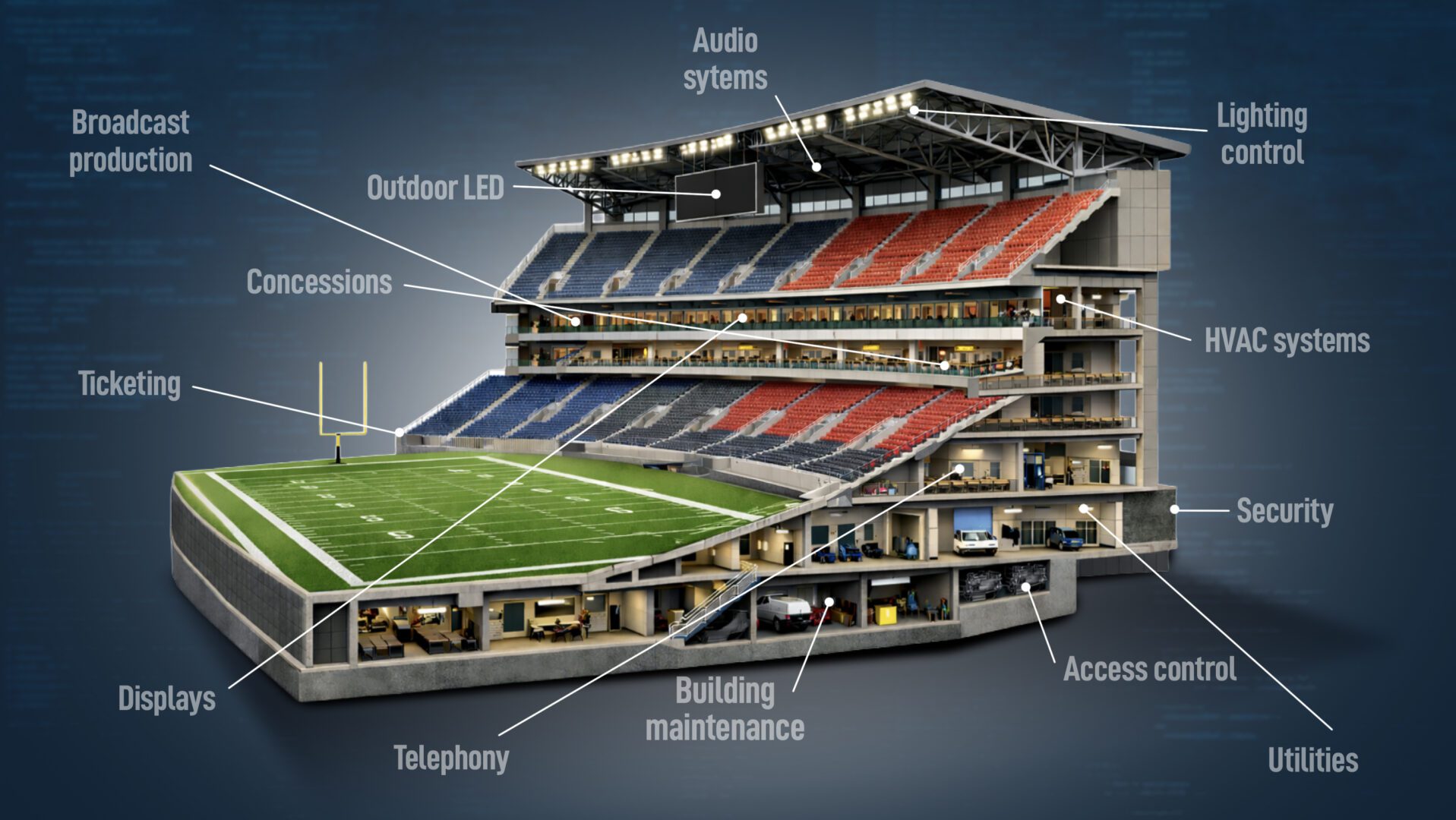
Venue technology is rapidly shifting from a cost center to a business platform. Across the sports industry, clubs and operators are investing in production systems, connectivity upgrades, and district-scale development models that are designed to generate value far beyond the final whistle.
Production infrastructure is becoming a scalable business asset
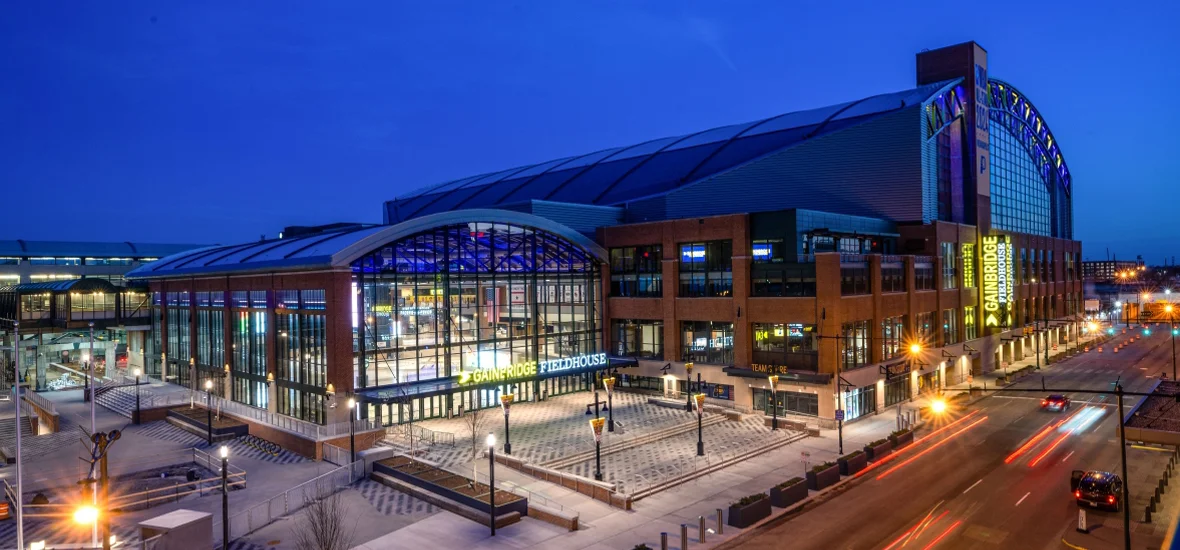
Pacers Sports & Entertainment has introduced a new IP-based broadcast control center built on the SMPTE ST 2110 standard to support in-venue production at Gainbridge Fieldhouse. By centralizing video, graphics, and live content operations across NBA, WNBA, and other events, the organization is transforming production infrastructure into a flexible asset that can serve multiple properties and event types.
The commercial logic is straightforward. Standardized, IP-based workflows can reduce operational friction, improve content output, and create a more efficient production model across a wider range of events. As teams look to maximize output while limiting bottlenecks, control-room architecture is becoming part of the core revenue stack rather than a hidden expense.
Connectivity is now a premium venue product
Atlético Madrid is upgrading communications and Wi-Fi infrastructure at Riyadh Air Metropolitano Stadium through a multi-phase deployment of HPE Networking technology. The project will bring in an AI-managed network with more than 1,500 next-generation access points, underscoring how venue connectivity is becoming a commercial product instead of a back-of-house utility.
For clubs and stadium operators, wireless performance now influences far more than fan convenience. Strong connectivity enables analytics, personalized services, sponsor activations, and richer digital experiences, all of which can increase engagement and unlock new monetization opportunities. In a venue economy increasingly driven by data, network quality is emerging as a competitive differentiator.
Mixed-use soccer districts are being built as long-term real estate plays
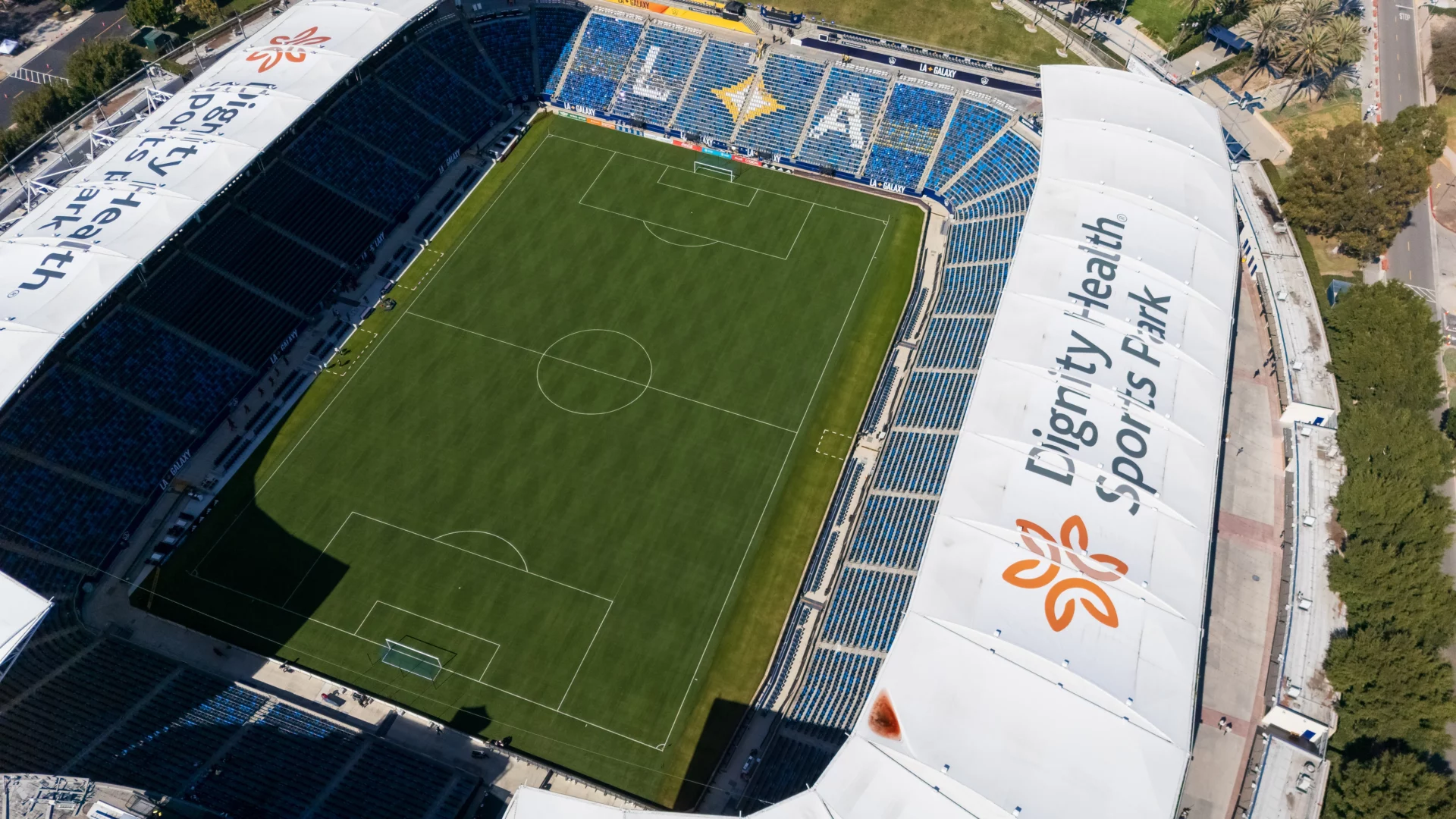
Sporting Club Jacksonville has selected the St. Johns Town Center area for a proposed mixed-use sporting and entertainment district anchored by a new 15,000-seat soccer stadium. The venue is expected to become the permanent home for the club’s men’s and women’s teams, but the larger strategy is centered on district development that can generate value well beyond matchdays.
By pairing the stadium with residential, retail, and dining components, the project reflects a broader shift in club strategy. Sports venues are increasingly being used to drive real estate appreciation, tenant demand, and year-round neighborhood traffic. The stadium becomes the anchor, but the district becomes the business model.
Privately funded stadiums are becoming anchors for year-round development
Chicago Fire FC has broken ground on a privately funded $750 million, 22,000-seat stadium in Chicago’s South Loop, with the venue slated to become the club’s permanent home in 2028. Designed by Gensler, the project is positioned as the anchor of The 78 riverfront development, reinforcing the growing role of stadiums as catalysts for larger urban investment strategies.
The financial significance extends beyond the building itself. A privately funded venue reduces reliance on public subsidy while giving the club greater control over the surrounding commercial ecosystem, including event programming, branding, and long-term development upside. In this model, the stadium is not just a sports facility; it is an anchor tenant for a broader mixed-use growth engine.
Broadcast infrastructure is being standardized for global event value
MLB Network is providing host world-feed production and technical infrastructure for the 2026 World Baseball Classic across venues in Miami, Houston, San Juan, and Tokyo. By standardizing the broadcast feed for international rightsholders, the network is helping simplify global media operations while strengthening the event’s value proposition for broadcasters.
This matters because the economics of international tournaments increasingly depend on efficient content delivery and consistent production quality across markets. When the broadcast backbone is built to scale, rights packages become easier to sell, easier to distribute, and more attractive to a broader set of media partners.
Across these projects, the pattern is clear: venue technology is moving from support function to strategic infrastructure. Whether the objective is stronger content, smarter connectivity, or a more valuable district, clubs and operators are investing in assets designed to compound commercial returns over time.
Why It Matters
Sports venues are no longer being treated as standalone facilities; they are becoming revenue-generating infrastructure built to support content, connectivity, and long-term real estate value. From IP-based production control centers to mixed-use stadium districts, clubs are using technology and development strategy to create assets that can scale beyond game day.
Content Package
This week in venue tech: Pacers deploy ST 2110 IP control rooms, Atlético Madrid rolls out an AI-managed Wi‑Fi network, and clubs push new stadium districts. Production, connectivity, and real estate—together. #SportsTech
#SportsTech#StadiumInnovation#SmartVenues
This week’s Stadium Tech Report highlights a clear pattern: teams and venue operators are treating technology and infrastructure as strategic assets—not just operational necessities. 1) IP control rooms for scalable production Pacers Sports & Entertainment built a new ST 2110-based broadcast production control center at Gainbridge Fieldhouse. By centralizing and standardizing how video, graphics, and live content are managed, the organization gains scalability across NBA, WNBA, and other events—while also future-proofing its production workflows. 2) AI-managed connectivity as a fan and analytics foundation Atlético Madrid’s Riyadh Air Metropolitano Stadium connectivity overhaul (HPE Networking) moves beyond “more Wi‑Fi.” With 1,500+ next-gen access points and AI-managed networking, the upgrade is positioned to support analytics, premium services, and more personalized fan experiences. 3) Stadium districts that extend value beyond matchday Sporting JAX’s proposed mixed-use soccer district in Jacksonville and Chicago Fire FC’s $750M South Loop stadium development both point to the same business logic: stadiums as catalysts for year-round programming and neighborhood growth—unlocking revenue through residential, retail, dining, and broader real estate value. 4) Global broadcast infrastructure that strengthens rights value MLB Network’s world-feed backbone for the 2026 World Baseball Classic standardizes technical infrastructure across Miami, Houston, San Juan, and Tokyo—making international media operations more efficient and potentially increasing rights product value. Big takeaway: IP-first production, AI-enabled connectivity, and development-driven venue ecosystems are converging. The winners won’t just build smarter venues—they’ll use tech to monetize the full lifecycle of the fan experience. Read more: Pacers ST 2110 control center: https://www.sportsvideo.org/2026/03/03/svg-in-indy-pacers-sports-entertainment-finds-production-sweet-spot-in-st-2110-based-control-center/ Atlético Metropolitano connectivity: https://www.coliseum-online.com/comms-tec-boost-at-metropolitano-stadium/ Sporting JAX district: https://www.news4jax.com/sports/2026/03/02/transformative-sporting-jax-announces-new-soccer-home-stadium-in-town-center-area/ Chicago Fire stadium: https://www.msn.com/en-us/sports/other/chicago-fire-fc-breaks-ground-on-750m-privately-funded-stadium/ar-AA1XwtC0 WBC 2026 world-feed: https://www.sportsvideo.org/2026/03/05/world-baseball-classic-2026-mlb-network-provides-world-feed-infrastructure-to-venues-broadcasters/
#SportsTech#StadiumInnovation#SmartVenues
Stadiums are upgrading fast: IP-based control rooms, AI-managed Wi‑Fi, and mixed‑use districts built for year‑round revenue. Which innovation excites you most? #SportsTech #StadiumInnovation #AI #ST2110 #SmartVenues #Connectivity #SportsBusiness
#SportsTech#StadiumInnovation#SmartVenues
From IP-based production control rooms to AI-managed stadium Wi‑Fi—and even new mixed-use stadium districts—this week’s Stadium Tech Report shows how teams are investing in technology and development to create scalable operations, better fan experiences, and year-round value. Highlights include Pacers’ ST 2110 control center, Atlético Madrid’s connectivity upgrade, Sporting JAX’s proposed soccer district, Chicago Fire’s $750M stadium, and MLB Network’s global broadcast backbone for the 2026 WBC. Read more in Stadium Tech Report.
#SportsTech#StadiumInnovation#SmartVenues
In 30 seconds: what’s new in stadium innovation this week? First—Pacers Sports & Entertainment rolled out an ST 2110-based IP production control room at Gainbridge Fieldhouse. Translation: smarter, more scalable in-venue broadcasting. Next—Atlético Madrid is upgrading Riyadh Air Metropolitano’s Wi‑Fi with an AI-managed network and 1,500+ next-gen access points—built for analytics and personalized fan services. Then—two big development moves: Sporting JAX is planning a mixed-use soccer district in Jacksonville, and Chicago Fire broke ground on a $750M South Loop stadium tied to a riverfront development. And finally—MLB Network is building the global broadcast backbone for the 2026 World Baseball Classic to standardize and streamline the world feed. Tech + connectivity + development. Stadiums are becoming strategic hubs.
#SportsTech#StadiumInnovation#SmartVenues
This week in stadium innovation—here are 5 moves to watch. 1) Pacers Sports & Entertainment: an ST 2110-based IP production control center at Gainbridge Fieldhouse to centralize video, graphics, and live content. 2) Atlético Madrid: upgraded connectivity at Riyadh Air Metropolitano with HPE Networking—AI-managed Wi‑Fi and 1,500+ next-gen access points. 3) Sporting JAX: a new 15,000-seat stadium site in Jacksonville’s St. Johns Town Center—plus residential, retail, and dining to grow revenue beyond matchdays. 4) Chicago Fire FC: broke ground on a $750M, 22,000-seat stadium in the South Loop, anchored to the 78 riverfront development. 5) MLB Network: delivering world-feed production infrastructure for the 2026 World Baseball Classic across Miami, Houston, San Juan, and Tokyo. Stadium tech isn’t just upgrades—it’s a business strategy. Which one would you bet on first?
#SportsTech#StadiumInnovation#SmartVenues
Venue tech is shifting from add-on to core infrastructure: IP-based broadcast control, AI-managed Wi-Fi, and district-ready stadium economics. Pacers, Atlético, Sporting JAX, Chicago Fire, and MLB Network show what’s next. #StadiumTech
#StadiumTech#SportsBusiness#VenueTechnology#AIinSports#BroadcastEngineering#SmartStadium#SMPTE2110#WiFi#DistrictDevelopment#SportsInnovation
Venue technology is quickly becoming core infrastructure—not a “nice-to-have.” Across broadcast, connectivity, and even real estate strategy, clubs and operators are treating tech platforms as scalable assets that unlock control, personalization, and new revenue beyond matchday. Key signals from the latest Stadium Tech Report: 1) IP control centers are centralizing production Pacers Sports & Entertainment deployed an IP-based broadcast control center built around SMPTE ST 2110 at Gainbridge Fieldhouse. By centralizing video, graphics, and live content operations across NBA, WNBA, and other events, the organization reduces operational friction and creates a more repeatable, scalable content engine. Why it matters: IP workflows make it easier to standardize production, move faster across events, and monetize content with greater flexibility. 2) AI-managed connectivity is turning Wi-Fi into a platform Atlético Madrid is upgrading stadium communications and Wi‑Fi at Riyadh Air Metropolitano Stadium using HPE Networking—introducing an AI-managed network with 1,500+ next-gen access points. This positions connectivity to power analytics, premium services, and more personalized fan engagement. Why it matters: as clubs treat connectivity like a data layer, they can support experiences that are measurable, targeted, and continuously improved. 3) Stadiums as anchors for district development Sporting JAX is pursuing a mixed-use soccer district around a planned 15,000-seat stadium, with revenue opportunities tied to residential, retail, and dining—strengthening the area year-round. Chicago Fire FC broke ground on a privately funded $750M, 22,000-seat stadium in Chicago’s South Loop, designed to anchor The 78 riverfront development and drive neighborhood activation. Why it matters: the business case is shifting from “event-only” to “district economics,” where venues become catalysts for long-term growth. 4) Standardized broadcast backbones for global events MLB Network is building a broadcast backbone for the 2026 World Baseball Classic across venues in Miami, Houston, San Juan, and Tokyo—standardizing the host world-feed for international rightsholders. Why it matters: standardized technical infrastructure streamlines global media operations and strengthens rights value. The takeaway: IP control, AI networks, and district-ready planning are converging. Clubs that invest early in “infrastructure thinking” are positioning themselves to scale operations, improve fan experiences, and capture value across the full lifecycle of the venue. What are you seeing in your market—more IP standardization, more AI-driven connectivity, or more district-driven capital plans?
#StadiumTech#SportsBusiness#VenueTechnology#AIinSports#BroadcastEngineering#SmartStadium#SMPTE2110#WiFi#DistrictDevelopment#SportsInnovation
Stadiums aren’t just seats anymore—IP broadcast control, AI-managed Wi‑Fi, and district-first development are the new playbook. 🏟️🤖📡 Which upgrade would you bet on first? #StadiumTech #VenueTechnology #SportsInnovation #AIinSports #WiFi #BroadcastEngineering #SMPTE2110 #SmartStadium
#StadiumTech#SportsBusiness#VenueTechnology#AIinSports#BroadcastEngineering#SmartStadium#SMPTE2110#WiFi#DistrictDevelopment#SportsInnovation
Big shift in stadium strategy: venue tech is becoming core infrastructure. From IP-based broadcast control at Gainbridge Fieldhouse to AI-managed Wi‑Fi at Riyadh Air Metropolitano, clubs are building scalable platforms for content, connectivity, and fan experiences. Meanwhile, Sporting JAX and Chicago Fire are betting on stadium-driven district development—and MLB Network is standardizing broadcast infrastructure for the 2026 World Baseball Classic.
#StadiumTech#SportsBusiness#VenueTechnology#AIinSports#BroadcastEngineering#SmartStadium#SMPTE2110#WiFi#DistrictDevelopment#SportsInnovation
Venues are leveling up—tech is becoming core infrastructure. First: Pacers Sports & Entertainment built an IP-based broadcast control center using SMPTE ST 2110—so video, graphics, and live content run from one scalable hub. Second: Atlético Madrid is upgrading Wi‑Fi with an AI-managed network—1,500+ next-gen access points to power analytics and personalized fan experiences. Third: stadiums are driving real estate value. Sporting JAX and Chicago Fire are planning district-first projects that generate revenue beyond matchdays. Bottom line: IP control + AI networks + district development = the new stadium playbook. Follow for more Stadium Tech updates.
#StadiumTech#SportsBusiness#VenueTechnology#AIinSports#BroadcastEngineering#SmartStadium#SMPTE2110#WiFi#DistrictDevelopment#SportsInnovation
Stadium tech is going from “extra” to essential infrastructure—here’s what’s changing. 1) IP broadcast control: Pacers Sports & Entertainment deployed an SMPTE ST 2110-based control center at Gainbridge Fieldhouse to centralize video, graphics, and live production across events. 2) AI-managed connectivity: Atlético Madrid is rolling out an AI network with 1,500+ next-gen access points—turning Wi‑Fi into a platform for analytics and premium fan services. 3) District economics: Sporting JAX and Chicago Fire are building stadium-centered mixed-use developments designed to drive year-round revenue. 4) Global standardization: MLB Network is creating a broadcast backbone for the 2026 World Baseball Classic to streamline international production. Tech-forward venues win: more control, more scalability, more value. Want part 2?
#StadiumTech#SportsBusiness#VenueTechnology#AIinSports#BroadcastEngineering#SmartStadium#SMPTE2110#WiFi#DistrictDevelopment#SportsInnovation
Venue tech is shifting from “support” to “core infrastructure.” IP-based broadcast control, AI-managed Wi-Fi, and stadium-led district development are turning connectivity + production into scalable business assets.
#StadiumTech#SportsBusiness#VenueConnectivity#IPBroadcast#SmartStadium
Venue technology is no longer a back-of-house expense—it’s becoming core infrastructure that clubs can scale, monetize, and carry across properties. Here’s what’s changing: 1) IP-based production = a reusable business asset Pacers Sports & Entertainment is rolling out an IP-based broadcast control center using SMPTE ST 2110 at Gainbridge Fieldhouse. By centralizing video, graphics, and live content operations across NBA/WNBA and other events, teams can reduce operational friction and increase content output—turning production capability into a flexible, scalable operating asset rather than a venue-only cost center. 2) Connectivity is becoming a premium venue product Atlético Madrid’s multi-phase HPE Networking deployment at Riyadh Air Metropolitano Stadium—powered by AI-managed networking and 1,500+ next-gen access points—signals where the market is headed. Better Wi-Fi isn’t just convenience; it enables analytics, personalized fan services, sponsor activation, and higher-value digital experiences. Network quality is becoming a competitive differentiator. 3) District development makes the stadium an anchor for long-term value Sporting Club Jacksonville’s proposed 15,000-seat stadium at St. Johns Town Center is designed to anchor a mixed-use sporting and entertainment district—where the stadium catalyzes residential, retail, and dining demand. The district becomes the business model. 4) Privately funded venues strengthen control over the full ecosystem Chicago Fire FC’s $750M, 22,000-seat stadium (South Loop) is positioned as the anchor of The 78 riverfront development. With private funding, clubs can reduce reliance on public subsidy and maintain greater control over branding, event programming, and long-term commercial upside. 5) Standardized broadcast infrastructure increases global event value MLB Network is providing host world-feed production and technical infrastructure for the 2026 World Baseball Classic across Miami, Houston, San Juan, and Tokyo—standardizing the broadcast backbone for international rightsholders. When production quality and delivery scale consistently, rights packages become easier to sell and distribute. Bottom line: clubs and operators are investing in venue technology that compounds returns over time—whether the goal is better content, smarter connectivity, or district-level growth. Control rooms, networks, and mixed-use real estate strategies are converging into the same playbook: build infrastructure that drives repeatable commercial outcomes.
#StadiumTech#SportsBusiness#VenueConnectivity#IPBroadcast#SmartStadium
Venue tech is going CORE. IP broadcast control, AI-managed Wi‑Fi, and stadium-led districts are turning infrastructure into revenue engines. 📡🏟️✨ #StadiumTech #SportsBusiness #VenueConnectivity #IPBroadcast #SMPTE2110 #SmartStadium #FanExperience #DistrictDevelopment #SportsInnovation
#StadiumTech#SportsBusiness#VenueConnectivity#IPBroadcast#SmartStadium
Stadium technology is evolving fast: clubs are building scalable, monetizable infrastructure. From IP-based broadcast control centers and AI-managed Wi‑Fi networks to stadiums designed as anchors for year-round mixed-use development, venue tech is becoming strategic—driving better content, deeper fan engagement, and long-term commercial value.
#StadiumTech#SportsBusiness#VenueConnectivity#IPBroadcast#SmartStadium
In 30 seconds: stadium tech is becoming business infrastructure. First—IP-based broadcast control. Teams like Pacers Sports & Entertainment are using SMPTE ST 2110 to run production across multiple events from one standardized setup. Second—connectivity as a product. Atlético Madrid is upgrading to AI-managed Wi‑Fi with 1,500+ access points—making analytics, personalization, and sponsor activations possible. Third—stadiums as district anchors. Jacksonville and Chicago Fire are betting on mixed-use development so value extends beyond matchdays. Bottom line: venue tech isn’t just support anymore—it compounds returns over time. What’s the biggest shift you’re seeing?
#StadiumTech#SportsBusiness#VenueConnectivity#IPBroadcast#SmartStadium
Venue tech is becoming core infrastructure. Here are 5 fast takeaways: 1) IP broadcast control is scalable. Pacers Sports & Entertainment built an SMPTE ST 2110-based control center to centralize video/graphics/live content across NBA/WNBA events. 2) Wi‑Fi is a premium feature. Atlético Madrid’s AI-managed network upgrade brings 1,500+ next-gen access points to power analytics and personalized fan experiences. 3) Stadiums are district engines. Sporting Club Jacksonville is planning a mixed-use soccer district where the stadium anchors year-round value. 4) Private funding increases control. Chicago Fire FC’s $750M stadium is positioned as the anchor for The 78 riverfront development. 5) Standardized international broadcast adds value. MLB Network is standardizing world-feed production for the 2026 World Baseball Classic across multiple markets. Overall trend: control rooms, networks, and districts—built to compound commercial returns. Agree or disagree?
#StadiumTech#SportsBusiness#VenueConnectivity#IPBroadcast#SmartStadium