Leagues and Teams Are Rebuilding the Fan Economy Through Stadium Tech and Venue Development
Across the sports landscape, teams and leagues are treating venues less like static buildings and more like revenue engines. From IP-based control rooms and league-wide camera networks to mixed-use districts and long-term stadium disputes, the common thread is clear: infrastructure is now a business strategy. These moves are designed to expand content output, improve operational efficiency, and unlock new real estate and sponsorship opportunities. The result is a faster-moving fan economy built around data, media, and year-round venue utilization.
Stadium Technology News
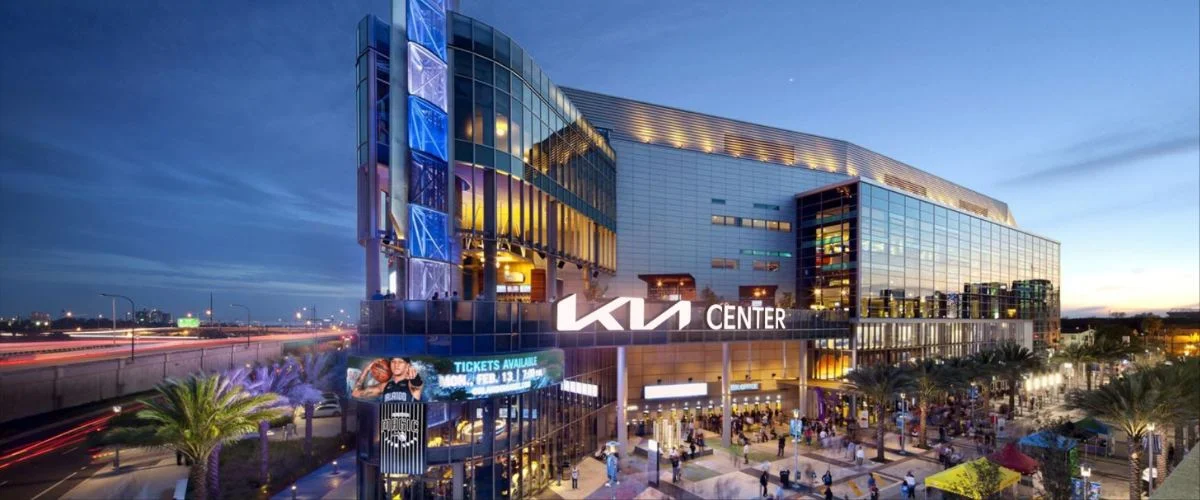
Orlando Magic modernize Kia Center with ST 2110 IP control room
The Orlando Magic have upgraded the Kia Center with a new SMPTE ST 2110 IP-based production control room, replacing legacy broadcast systems with a fully networked workflow built for NBA games, concerts, and in-venue programming. The significance goes beyond production quality: the new architecture creates a scalable operational backbone that can support remote workflows, cloud integration, and future data-driven content models, strengthening the arena’s ability to generate value across multiple event categories.
NHL rolls out league-wide 10.5K camera network for officiating and content creation
The NHL has completed a league-wide deployment of Cosm’s C360 Capture Systems, placing four glass-level 10.5K ultra-high-resolution cameras in every arena across the league. The system is intended to improve instant replay, player-tracking analytics, officiating support, and immersive content production, while integrating with NHL EDGE data to build a deeper digital asset pipeline across more than 1,500 games each season. The rollout reflects a broader shift in which leagues are investing in infrastructure not just to protect competitive integrity, but to create new media products, data assets, and sponsorship inventory.
Stadium Project News
Texans unveil Toro District as a mixed-use destination anchored by team operations
The Houston Texans have released renderings for the Toro District, an 83-acre development in northwest Harris County centered on a new team headquarters, indoor fieldhouse, and NFL training complex. The larger plan includes retail, hospitality, residential, and community space, underscoring a growing industry reality: teams are no longer building facilities solely for practice and game-day operations, but as anchor tenants in broader real estate ecosystems designed to drive year-round traffic and diversify revenue.
Florida approves land transfer to move Rays ballpark project forward
Florida officials have approved a key land transfer that removes a major obstacle for the Tampa Bay Rays’ proposed new waterfront ballpark and surrounding mixed-use development. The decision secures a critical parcel and adds momentum to a project that could reshape the franchise’s long-term economics, influence public-private financing debates, and create a development platform that extends well beyond baseball attendance.
FIFA supports Gaza stadium rebuild tied to broader recovery effort
FIFA has backed a football-led reconstruction plan in Gaza that includes a proposed 20,000-seat national stadium, a FIFA academy, five regulation pitches, and 50 community mini-fields. Although the project remains dependent on security conditions, it highlights how sports infrastructure is increasingly being positioned as part of economic recovery, youth development, and social stabilization, with venues serving both athletic and civic functions.
Stadium Business News
UCLA remains at Rose Bowl for 2026 amid stadium legal dispute
UCLA will remain at the Rose Bowl for the 2026 football season while litigation continues over the university’s attempted move to SoFi Stadium. The dispute, centered on a lease that runs through 2044, illustrates how stadium agreements can lock in venue economics for decades and how legal fights over location, control, and contractual rights can shape a program’s revenue strategy and operational flexibility.
Why It Matters
Across the sports landscape, teams and leagues are treating venues less like static buildings and more like revenue engines. From IP-based control rooms and league-wide camera networks to mixed-use districts and long-term stadium disputes, the common thread is clear: infrastructure is now a business strategy. These moves are designed to expand content output, improve operational efficiency, and unlock new real estate and sponsorship opportunities. The result is a faster-moving fan economy built around data, media, and year-round venue utilization.
Content Package
From ST 2110 IP control rooms to 10.5K league-wide camera networks, and new mixed-use districts to ballpark land approvals—sports venues are rebuilding the fan economy with tech + real estate. Stadiums are becoming revenue engines year-round.
#StadiumTech#VenueDevelopment#SportsBusiness#SportsMedia#FanExperience#NHL#NBA#BroadcastEngineering#MixedUse#StadiumNews
Sports leagues and teams are accelerating two major rebuild tracks at once: modern venue technology and expanded real-estate ecosystems. Together, they’re reshaping how fans experience events—and how organizations monetize attention across the full year. Orlando’s Kia Center upgrade is a clear signal of where broadcast operations are headed. By installing an SMPTE ST 2110 IP-based production control room, the Magic replaced legacy infrastructure with a fully networked workflow designed for NBA games, concerts, and in-venue programming. The strategic value isn’t just “new gear”—it’s a scalable production backbone that enables remote workflows, cloud integration, and future data-driven content operations. Meanwhile, the NHL is investing at the league level. Its deployment of Cosm’s C360 Capture Systems—four glass-level 10.5K cameras in every arena—aims to strengthen instant replay, player-tracking analytics, officiating support, and immersive content creation. Importantly, this also deepens the digital asset pipeline by integrating with NHL EDGE data across 1,500+ games each season. The result is both competitive integrity improvements and new media/sponsorship inventory. On the stadium project side, teams are increasingly positioning themselves as anchor tenants in larger development platforms. The Houston Texans’ Toro District—an 83-acre mixed-use plan anchored by team operations, an indoor fieldhouse, and an NFL training complex—reflects a broader industry trend: facilities are no longer built solely for game day. They’re designed to generate year-round foot traffic and diversified revenue streams. In Florida, the Rays’ ballpark momentum increased after officials approved a key land transfer that clears a critical obstacle for a new waterfront ballpark and mixed-use development. These decisions often determine whether a franchise can unlock long-term economics that extend beyond attendance. Sports infrastructure is also being framed as part of broader recovery and community stabilization. FIFA’s support for a Gaza football-led reconstruction plan—including a proposed 20,000-seat national stadium, a FIFA academy, pitches, and community mini-fields—highlights how stadium projects can serve civic and youth development goals, contingent on security conditions. And even when the “new build” story doesn’t move, venue economics still evolve through contracts. UCLA’s continued stay at the Rose Bowl for 2026 amid litigation underscores how long-term lease agreements (through 2044) can lock in revenue realities—and how disputes over control and contractual rights can shape operational flexibility for years. Bottom line: the fan economy is being rebuilt with a new playbook—networked production tech, data-rich capture systems, and stadium-adjacent real estate that turns venues into destinations. The teams and leagues that execute across both tracks will be best positioned to grow media value, sponsorship inventory, and year-round demand. What’s your take: is the biggest unlock coming from production tech, or from mixed-use development?
#StadiumTech#VenueDevelopment#SportsBusiness#SportsMedia#FanExperience#NHL#NBA#BroadcastEngineering#MixedUse#StadiumNews
Stadiums aren’t just seats anymore—IP production, 10.5K cameras, and mixed-use districts are powering the new fan economy. 📡🏟️🚀 #StadiumTech #VenueDevelopment #SportsMedia #Sponsorship #MixedUse #NHL #NBA #BroadcastEngineering #SportsBusiness #FanExperience
#StadiumTech#VenueDevelopment#SportsBusiness#SportsMedia#FanExperience#NHL#NBA#BroadcastEngineering#MixedUse#StadiumNews
Sports venues are moving fast as leagues and teams rebuild the fan economy. • The Orlando Magic modernized Kia Center with an SMPTE ST 2110 IP control room for a scalable, networked production workflow. • The NHL completed a league-wide rollout of 10.5K glass-level cameras to enhance replay, analytics, officiating support, and immersive content. • The Houston Texans unveiled renderings for Toro District, an 83-acre mixed-use development anchored by team operations. • Florida approved a land transfer that clears momentum for the Tampa Bay Rays’ proposed new waterfront ballpark and surrounding mixed-use project. • FIFA backed a Gaza football reconstruction plan tied to broader recovery efforts. • UCLA will remain at the Rose Bowl for 2026 while litigation continues over a move to SoFi. Technology + development are turning stadiums into year-round destinations—and new revenue engines.
#StadiumTech#VenueDevelopment#SportsBusiness#SportsMedia#FanExperience#NHL#NBA#BroadcastEngineering#MixedUse#StadiumNews
[0-3s] Stadiums are getting a glow-up—here’s what’s changing. [3-10s] The Orlando Magic upgraded Kia Center with an SMPTE ST 2110 IP production control room—networked workflows for games, concerts, and future data-driven content. [10-18s] The NHL went bigger: a league-wide 10.5K camera network for replay, tracking analytics, officiating support, and immersive media. [18-27s] And it’s not just tech—teams are building destinations. The Texans’ Toro District is an 83-acre mixed-use hub anchored by team operations. [27-35s] Plus, the Rays gained momentum with a key land transfer for a new waterfront ballpark and mixed-use development. [35-45s] Bottom line: venues are becoming year-round revenue engines—powered by IP, data, and real estate. Which upgrade do you think matters most? Tech or development?
#StadiumTech#VenueDevelopment#SportsBusiness#SportsMedia#FanExperience#NHL#NBA#BroadcastEngineering#MixedUse#StadiumNews
[0-5s] Stadiums are evolving fast—tech, cameras, and new districts. [5-14s] Orlando’s Kia Center added an SMPTE ST 2110 IP control room—built for scalable, networked production across NBA games and concerts. [14-24s] The NHL is rolling out Cosm’s 10.5K camera network in every arena—boosting replay, player tracking, officiating support, and immersive content. [24-36s] Teams are also expanding beyond the field. The Texans unveiled Toro District, an 83-acre mixed-use development anchored by team operations. [36-48s] And in Florida, Rays ballpark momentum grew after a land transfer cleared a major hurdle for a waterfront mixed-use project. [48-60s] Stadiums aren’t just for game day anymore—they’re becoming year-round fan economy engines. Tech first, or real estate first?
#StadiumTech#VenueDevelopment#SportsBusiness#SportsMedia#FanExperience#NHL#NBA#BroadcastEngineering#MixedUse#StadiumNews
Leagues and teams are rebuilding the fan economy with stadium tech and venue development: ST 2110 IP control rooms, 10.5K league camera networks, and mixed-use districts that drive year-round revenue—plus major ballpark momentum.
#StadiumTech#SportsBusiness#VenueDevelopment
Sports aren’t just competing for fans anymore—they’re competing for attention, data, and year-round spend. The latest Stadium Tech Report shows a clear pattern: leagues and teams are investing in infrastructure that strengthens operations today while creating new media, analytics, and real-estate revenue streams for tomorrow. Key takeaways: 1) Stadium tech is becoming a scalable “digital backbone” The Orlando Magic’s upgrade to an SMPTE ST 2110 IP-based production control room at Kia Center replaces legacy broadcast workflows with a fully networked architecture built for NBA games, concerts, and in-venue programming. The bigger win: scalability for remote workflows, cloud integration, and future data-driven content models. 2) League-wide camera networks are turning officiating into content and data The NHL’s rollout of Cosm’s C360 Capture Systems—four glass-level 10.5K ultra-high-resolution cameras in every arena—aims to improve instant replay, player-tracking analytics, and officiating support. Just as important, it feeds a deeper digital asset pipeline across 1,500+ games per season, strengthening sponsorship and media inventory. 3) Venue development is shifting from “game-day” to “always-on” ecosystems The Houston Texans’ Toro District plan (83 acres) positions team operations as the anchor for a mixed-use destination—headquarters, indoor fieldhouse, training complex, plus retail, hospitality, residential, and community space. This reflects a broader industry reality: teams are building anchor-tenancy value, not just facilities. 4) Ballpark progress hinges on land, financing, and long-term leverage Florida’s land transfer approval advances the Tampa Bay Rays’ waterfront ballpark and surrounding mixed-use development. Decisions like this can reshape franchise economics and influence public-private financing debates—often with effects far beyond the ballpark itself. 5) Stadiums increasingly serve civic and recovery roles FIFA’s support for a Gaza rebuild plan—including a proposed 20,000-seat national stadium, academy, pitches, and community mini-fields—signals how sports infrastructure can be positioned for economic recovery, youth development, and social stabilization. 6) Contracts and litigation can lock in (or limit) venue strategy for decades UCLA staying at the Rose Bowl for 2026 while litigation continues over a move to SoFi Stadium highlights how lease terms and contractual rights shape long-term revenue strategy and operational flexibility. Bottom line: the fan economy is being rebuilt through technology that multiplies content and data, and through venue ecosystems designed to drive traffic year-round. The winners will be organizations that treat stadiums as platforms—media, analytics, hospitality, and community—rather than single-purpose buildings. What’s your take: which investment is most likely to deliver measurable ROI first—league camera networks, IP production upgrades, or mixed-use district development?
#StadiumTech#SportsBusiness#VenueDevelopment
Fan economy upgrade mode 🚀 ST 2110 IP control rooms, 10.5K league cameras, and mixed-use venue districts = more data + more content + year-round revenue. 🏟️📡 What’s next? #StadiumTech #SportsBusiness #VenueDevelopment #SportsMedia #NHL #NBA #Sponsorship #RealEstate #IPNetworking #DataDriven
#StadiumTech#SportsBusiness#VenueDevelopment
Stadiums are evolving fast—both on the tech side and in how teams build for the long term. From the Orlando Magic’s new ST 2110 IP-based production control room to the NHL’s league-wide 10.5K camera network for officiating, analytics, and immersive content, venues are becoming smarter and more scalable. On the development front, the Houston Texans’ Toro District concept and the Florida approval advancing the Rays’ waterfront ballpark show how teams are increasingly tying operations to broader mixed-use ecosystems to drive traffic year-round. Meanwhile, FIFA’s support for a Gaza stadium rebuild underscores the growing role of venues in recovery, youth development, and community stability—while UCLA’s Rose Bowl situation highlights how leases and legal disputes can shape stadium economics for decades. The big story: stadiums are turning into platforms for media, data, and diversified revenue—not just game-day destinations.
#StadiumTech#SportsBusiness#VenueDevelopment
Hook (0-5s): Stadiums are no longer just seats and scoreboards… they’re becoming data and revenue machines. Scene 1 (5-15s): Orlando Magic upgraded Kia Center with an SMPTE ST 2110 IP control room—networked production built for NBA games, concerts, and future cloud workflows. Scene 2 (15-25s): The NHL deployed a league-wide 10.5K camera network—better replay, player tracking, officiating support, and immersive content at 1,500+ games. Scene 3 (25-35s): Teams are also building “always-on” districts. The Texans’ Toro District mixes team operations with retail, hospitality, housing, and community space. Scene 4 (35-45s): Even ballpark timelines depend on land and legal decisions—like the Rays’ project getting a land transfer in Florida. Close (45s-50s): The takeaway: stadium tech + venue development = the new fan economy. Which upgrade would you want in your arena first—cameras, control rooms, or mixed-use districts?
#StadiumTech#SportsBusiness#VenueDevelopment
Hook (0-5s): The fan economy is being rebuilt—through stadium tech and venue development. Segment 1 (5-18s): Orlando Magic modernized Kia Center with an SMPTE ST 2110 IP-based production control room. It’s not just better video—it’s a scalable network for remote and cloud-ready workflows. Segment 2 (18-30s): The NHL rolled out Cosm’s 10.5K camera network in every arena—supporting instant replay, player tracking analytics, officiating help, and immersive content. Segment 3 (30-42s): On the business side, teams are anchoring real-estate ecosystems. The Texans’ Toro District pairs team HQ and training with retail, hospitality, residential, and community space. Segment 4 (42-55s): And stadium progress isn’t always straightforward—ballparks can hinge on land transfers and long-term leases. CTA (55-60s): What matters more to you: the tech behind the scenes, or the venue experience outside the stadium? Comment below!
#StadiumTech#SportsBusiness#VenueDevelopment