Stadium Tech and Venue Deals Signal a New Phase of Sports Infrastructure Investment
This week’s stadium and venue developments point to a broader shift in sports business: teams, leagues, and governing bodies are treating infrastructure as a competitive asset, not just a game-day necessity. From IP-based control rooms and league-wide camera networks to mixed-use districts and stadium redevelopment, the common thread is monetization through technology, real estate, and fan engagement.
Stadium Technology News
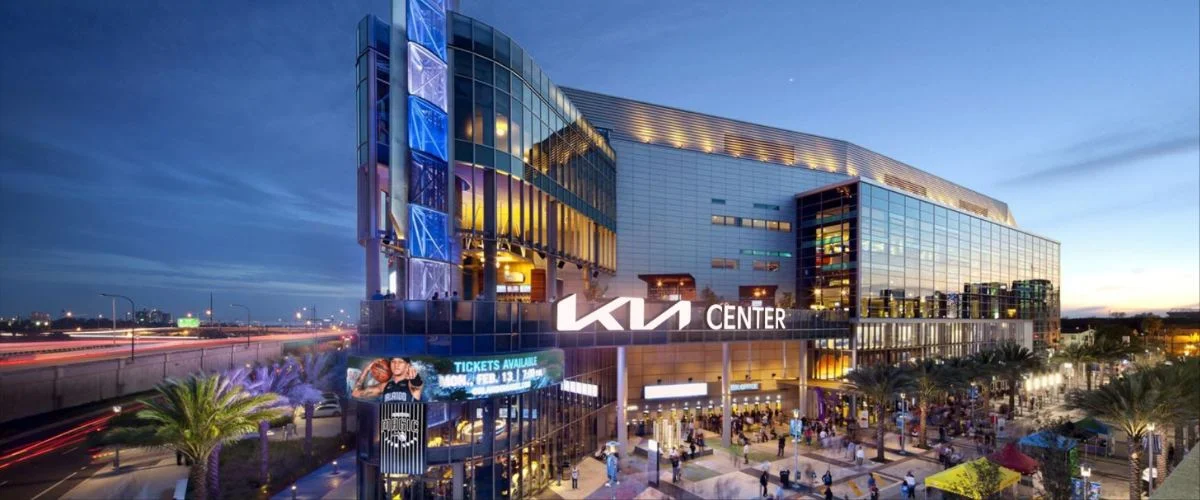
Orlando Magic modernize game production with ST 2110 IP control room at Kia Center
The Orlando Magic have moved to a new SMPTE ST 2110 IP-based production control room at Kia Center, replacing legacy broadcast systems with a networked workflow built for NBA games, concerts, and in-venue content. The upgrade is more than a technical refresh: it gives the venue a scalable production backbone that can support remote operations, cloud integration, and more efficient content creation across multiple revenue-generating event types.
NHL rolls out league-wide 10.5K camera network to strengthen officiating and content output
The NHL has completed a league-wide deployment of Cosm’s C360 Capture Systems, installing four glass-level 10.5K ultra-high-resolution cameras in all 32 arenas. The system is designed to improve instant replay, player-tracking analytics, officiating support, and immersive digital content, while integrating with NHL EDGE data to enhance both competitive integrity and media value across more than 1,500 games each season.
Stadium Project News
Texans reveal Toro District plan built around team headquarters and year-round entertainment
The Houston Texans have unveiled renderings for the Toro District, an 83-acre mixed-use development in northwest Harris County centered on a new team headquarters, indoor fieldhouse, and NFL training complex. The project reflects a growing industry strategy: using sports facilities as anchors for retail, residential, hospitality, and community development that can generate activity and revenue well beyond the calendar of home games.
Florida advances Rays ballpark plan with land transfer approval
Florida officials have approved a critical land transfer that removes a major obstacle from the Tampa Bay Rays’ proposed waterfront ballpark project. The move helps unlock a broader development conversation around financing, infrastructure, and mixed-use growth, underscoring how modern ballpark deals are increasingly tied to real estate strategy and public-sector investment.
FIFA supports Gaza stadium rebuild as part of wider recovery effort
FIFA has backed a football-led reconstruction initiative in Gaza that includes a proposed 20,000-seat national stadium, a FIFA academy, five regulation pitches, and 50 community mini-fields. Beyond the sporting implications, the project highlights how global sports bodies are positioning infrastructure as a tool for economic recovery, youth development, and long-term community rebuilding.
Stadium Business News
UCLA stays at Rose Bowl for 2026 as stadium dispute continues
UCLA will remain at the Rose Bowl for the 2026 football season while its legal dispute with the City of Pasadena and Rose Bowl Operating Company continues over the university’s attempted move to SoFi Stadium. The case illustrates the business risk embedded in long-term venue agreements, where lease rights, relocation plans, and legal timelines can shape a program’s stadium strategy for years.
Why It Matters
This week’s stadium and venue developments point to a broader shift in sports business: teams, leagues, and governing bodies are treating infrastructure as a competitive asset, not just a game-day necessity. From IP-based control rooms and league-wide camera networks to mixed-use districts and stadium redevelopment, the common thread is monetization through technology, real estate, and fan engagement.
Content Package
Stadium deals are entering a new era: Orlando’s ST 2110 IP control room, the NHL’s 10.5K camera network, and new mixed-use districts from the Texans to the Rays—plus FIFA-backed rebuilding. Big investment, bigger impact.
#StadiumTech#SportsInfrastructure#SportsBusiness
Stadium Tech and Venue Deals Signal a New Phase of Sports Infrastructure Investment Sports infrastructure isn’t just getting upgraded—it’s being reimagined as a scalable, data-driven platform and a real-estate engine. Here’s what stood out across Stadium Tech Report’s latest developments: 1) Modernized venue production for multi-revenue event models The Orlando Magic’s move to an SMPTE ST 2110 IP-based production control room at Kia Center replaces legacy broadcast workflows with a networked, future-ready backbone. The strategic value goes beyond technical refresh: it supports remote operations, cloud integration, and faster content creation across NBA games, concerts, and in-venue experiences. 2) League-wide camera networks to strengthen both competition and content The NHL’s completion of a league-wide 10.5K camera deployment (four glass-level ultra-high-resolution cameras in all 32 arenas) is a clear signal that officiating support and immersive media are becoming core infrastructure priorities. With integration tied to NHL EDGE data, the impact spans instant replay, player-tracking analytics, and enhanced digital content across 1,500+ games each season. 3) Stadiums as year-round destinations—and anchors for mixed-use growth The Houston Texans’ Toro District (83 acres) centers on a new team headquarters, indoor fieldhouse, and NFL training complex—built to drive activity well beyond game day. This matches a broader industry shift: sports facilities increasingly function as catalysts for retail, residential, hospitality, and community development. 4) Ballpark progress tied to land strategy and financing realities Florida’s land transfer approval for the Tampa Bay Rays’ waterfront ballpark removes a major hurdle and reinforces how modern venue deals depend on real estate strategy, public-sector investment, and infrastructure planning—not just stadium design. 5) Global sports infrastructure as recovery and youth development infrastructure FIFA’s support for a football-led reconstruction initiative in Gaza—including a proposed 20,000-seat national stadium, academy, pitches, and community mini-fields—shows how international sports organizations are positioning infrastructure as a long-term tool for economic recovery and community rebuilding. 6) Legal risk remains a major variable in venue strategy UCLA staying at the Rose Bowl for 2026 while its dispute continues highlights a durable business truth: lease rights, relocation plans, and litigation timelines can materially shape program strategy for years. Bottom line: The next phase of sports infrastructure investment is converging technology, data, and development economics. From IP production networks to league-wide camera systems—and from mixed-use districts to land approvals—venues are becoming platforms for revenue, engagement, and community impact. What’s your take: will the biggest winners be the teams investing most in production/data, or the organizations building the strongest real-estate and financing models? #StadiumTech #SportsInfrastructure #VenueDevelopment #BroadcastEngineering #SportsAnalytics
#StadiumTech#SportsInfrastructure#SportsBusiness
Stadiums are leveling up fast: Orlando’s ST 2110 IP control room, the NHL’s 10.5K camera network, and new mixed-use destination plans from the Texans to the Rays. Tech + real estate = the next play. 🏟️📡 #StadiumTech #SportsBusiness #VenueDevelopment #SMPTE2110 #NHL #SportsAnalytics #Broadcast
#StadiumTech#SportsInfrastructure#SportsBusiness
Stadium Tech Report is highlighting a major shift in sports infrastructure investment. The Orlando Magic upgraded to an SMPTE ST 2110 IP production control room, while the NHL rolled out a league-wide 10.5K camera network to enhance officiating and content. On the venue side, the Texans unveiled the Toro District, Florida advanced the Rays’ waterfront ballpark plan with a key land transfer, and FIFA backed a Gaza stadium rebuild effort. Meanwhile, UCLA’s ongoing Rose Bowl dispute shows how legal risk can shape long-term stadium strategy.
#StadiumTech#SportsInfrastructure#SportsBusiness
Stadiums aren’t just being built—they’re being upgraded into data-and-revenue machines. In Orlando, the Magic moved to an SMPTE ST 2110 IP control room—networked and built for NBA games, concerts, and more. Across the NHL, 10.5K cameras are now in all 32 arenas to improve instant replay, player-tracking analytics, and officiating support. And off the field: the Texans’ Toro District is a year-round mixed-use plan, while Florida cleared a major land step for the Rays’ waterfront ballpark. So what’s the big takeaway? Sports infrastructure is merging technology, media, and real estate. Which one do you think matters most for the future—broadcast tech, analytics, or the development deals?
#StadiumTech#SportsInfrastructure#SportsBusiness
Sports infrastructure is entering a new phase—and the headlines are proving it. First: the Orlando Magic upgraded to an SMPTE ST 2110 IP-based production control room at Kia Center—built for faster, scalable content creation across events. Second: the NHL completed a league-wide 10.5K camera network in all 32 arenas—aimed at stronger officiating support, better replay, and deeper player-tracking analytics. Third: stadium deals are becoming development deals. The Texans’ Toro District and the Rays’ waterfront ballpark progress show how land, financing, and mixed-use strategy drive the next wave. Plus: FIFA’s support for rebuilding in Gaza highlights how infrastructure can support recovery and youth development. Tech + media + real estate. That’s the future of sports venues. Want more infrastructure breakdowns? Follow for daily sports business news.
#StadiumTech#SportsInfrastructure#SportsBusiness