Stadium Tech, Big Builds, and New Revenue Models Define the Week in Sports Venues
From 6 GHz Wi-Fi deployments and AI-driven ticketing tools to billion-dollar stadium plans and premium hospitality additions, the latest venue news underscores how teams are turning infrastructure into a competitive business asset. The common thread is clear: modern stadiums are being designed not just to host events, but to monetize data, improve throughput, and unlock year-round revenue.
STADIUM TECHNOLOGY NEWS
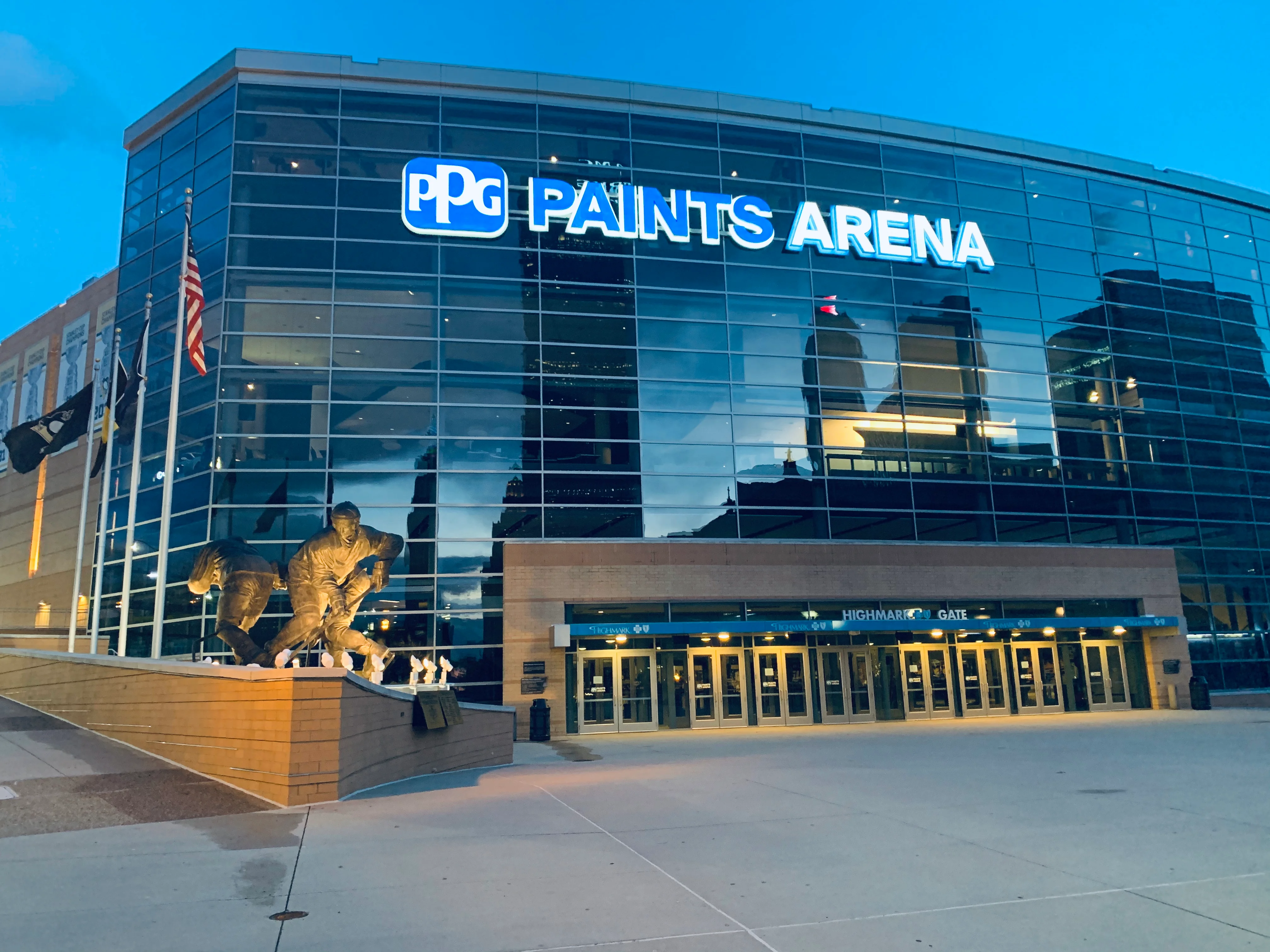
PPG Paints Arena upgrades wireless infrastructure to meet rising fan demand
PPG Paints Arena in Pittsburgh has deployed a new 6 GHz Wi-Fi network built to handle the demands of high-density event crowds during concerts and Pittsburgh Penguins games. With roughly 500 access points and double the arena’s wireless capacity, the upgrade is aimed at supporting faster mobile payments, smoother digital engagement, and a more reliable in-venue experience as connectivity becomes a core part of the fan economy.
Delta Dental Stadium invests in new LED board as part of broader ballpark refresh
Delta Dental Stadium in Manchester, New Hampshire, is adding a new left-field LED videoboard as part of more than $1 million in upgrades ahead of the 2026 season. The investment reflects a broader push to modernize the home of the Double-A New Hampshire Fisher Cats, with enhanced presentation and expanded partnership inventory helping drive stronger game-day value.
STADIUM PROJECT NEWS
Buffalo Bills stadium project clears major exterior construction milestone
Construction crews have completed the perforated metal exterior panels that form the outer shell of the Buffalo Bills’ new $2 billion stadium in Orchard Park, New York. The 62,000-seat venue remains on track to open for the 2026 NFL season, marking another step in a project that is expected to reshape the team’s long-term revenue base and premium seating strategy.
Chicago Bears unveil $5 billion domed stadium concept tied to a larger redevelopment play
The Chicago Bears have released renderings for a proposed $5 billion stadium redevelopment that would replace or significantly transform Soldier Field. The concept features a translucent roof, seating for about 72,000, and an adjacent entertainment district built to support concerts, conventions, and major sporting events, signaling a shift from single-purpose stadium economics to a year-round destination model.
Gold Coast Arena project advances with consortium selected for Olympic-era development
A global consortium has been selected to advance the proposed Gold Coast Arena in Southport, Australia, a planned indoor venue tied to preparations for the 2032 Brisbane Olympic and Paralympic Games. The group will now refine the design, financing, and delivery plan for the minimum 12,000-seat arena expected to open around 2030, illustrating how Olympic planning continues to accelerate venue investment and private-sector participation.
Rome stadium project moves closer to construction after regulatory approval
Rome’s Capitoline Assembly has approved the compliance review for A.S. Roma’s proposed new stadium in the Pietralata district, confirming the project meets regulatory requirements and retains its public-interest status. The roughly €1 billion, 60,000-seat venue is now positioned for the next phase of approvals, with construction potentially beginning in 2027 if the multi-agency process stays on track.
STADIUM BUSINESS NEWS
StubHub introduces AI tool that gives teams and venues more direct control over ticketing
StubHub has launched an AI-powered platform called Distribution Manager that allows teams, venues, and event organizers to create events, manage inventory, and list tickets through simple prompts. By combining marketplace data with pricing and demand insights, the tool gives rightsholders a more direct path to more than 125 million global users and signals a broader shift toward automated, data-led ticket distribution.
Camden Yards adds wraparound bar to deepen premium and concession revenue
The Baltimore Orioles are building a new open-air wraparound bar in the right-field Flag Court area of Oriole Park at Camden Yards as part of ongoing fan amenity upgrades. The Corona-branded space will allow service from both the Flag Court and Eutaw Street sides, expanding food-and-beverage capacity and creating another monetizable social zone inside the ballpark.
Daikin Park expands AI security screening to improve entry flow
The Houston Astros have renewed and expanded their partnership with Evolv Technology to upgrade screening systems at Daikin Park. The agreement adds next-generation Express screening units and the eXpedite bag-screening system, reflecting how venues are using security technology not only to manage risk, but also to reduce friction at gates and improve throughput without sacrificing the guest experience.
Why It Matters
From 6 GHz Wi-Fi deployments and AI-driven ticketing tools to billion-dollar stadium plans and premium hospitality additions, the latest venue news underscores how teams are turning infrastructure into a competitive business asset. The common thread is clear: modern stadiums are being designed not just to host events, but to monetize data, improve throughput, and unlock year-round revenue.
Content Package
From better in-venue Wi‑Fi to AI-powered entry screening and new premium spaces, this week’s stadium news shows a clear shift toward tech-driven fan experiences and smarter revenue models. Major construction milestones—from Buffalo to Chicago—also underline how quickly venue projects are evolving into year-round destinations. Here’s what to watch next in stadium technology, projects, and business updates.
#StadiumTech#SportsBusiness#VenueInnovation#FanExperience#AISecurity#Ticketing
Stadiums are leveling up: 6 GHz Wi‑Fi for faster payments, new LED boards, and major builds from Buffalo to Chicago. Plus AI ticketing and smarter security screening—fans get smoother entry and engagement.
#StadiumTech#SportsBusiness#VenueInnovation#FanExperience#AISecurity#Ticketing
This week in sports venues, the common thread is clear: stadiums are shifting from “places to watch” to technology-powered, year-round revenue platforms. **Stadium Tech: Connectivity and the fan economy** - **PPG Paints Arena** upgraded to a **6 GHz Wi‑Fi network** with ~**500 access points** and **double the wireless capacity**, targeting higher-density crowds during concerts and Penguins games. The goal isn’t just speed—it’s enabling smoother mobile payments and more reliable digital engagement. - **Daikin Park** expanded its **AI security screening** partnership with Evolv Technology, adding **Express** units and **eXpedite bag screening** to improve gate throughput without degrading the guest experience. **Big Builds: New capacity, new economics** - The **Buffalo Bills** project hit a major milestone with the completion of the **perforated metal exterior panels** on its **$2B** stadium—still on track for a **2026** opening. - The **Chicago Bears** unveiled a **$5B domed stadium concept** tied to a broader redevelopment plan, featuring a translucent roof, ~**72,000** seats, and an adjacent entertainment district aimed at driving **year-round destination value**. - International momentum continues: **Gold Coast Arena** advances via a selected consortium for an Olympics-era development, while **A.S. Roma’s** proposed ~**€1B** stadium moved closer after regulatory approval, with construction potentially starting in **2027**. **New Revenue Models: Ticketing, premium spaces, and partnerships** - **StubHub’s AI “Distribution Manager”** gives rightsholders more direct control—creating events, managing inventory, and listing tickets through prompts—signaling a move toward **automated, data-led distribution**. - The **Orioles** added a **wraparound bar** at Camden Yards to deepen premium and concession revenue, creating another monetizable social zone inside the ballpark. **Why it matters** Together, these updates show venues investing in the layers that increasingly drive revenue: **frictionless access (AI security), always-on engagement (next-gen connectivity), and smarter monetization (ticketing + premium amenities)**. Stadiums that treat technology and design as revenue engines—not just guest services—are positioning for the next cycle of fan expectations. What do you think will be the next “must-have” stadium upgrade: connectivity, security, ticketing, or premium real estate?
#StadiumTech#SportsBusiness#VenueInnovation#FanExperience#AISecurity#Ticketing
Stadiums aren’t just building seats—they’re building revenue. 📶 6GHz Wi‑Fi, AI security, LED upgrades, new bars + domed concepts, and AI ticket distribution. The fan economy is tech-first. #StadiumTech #SportsBusiness #VenueInnovation #WiFi #AISecurity #Ticketing #SportsFacilities #FanExperience #StadiumDesign
#StadiumTech#SportsBusiness#VenueInnovation#FanExperience#AISecurity#Ticketing
Stadiums are getting a serious upgrade—here’s what happened this week. First: PPG Paints Arena added a 6 GHz Wi‑Fi network with about 500 access points—built for huge crowds and faster mobile payments. Next: Daikin Park expanded AI security screening to speed up entry using next-gen tools that reduce friction at the gates. Now the big builds: the Bills cleared a major exterior milestone on a new $2B stadium, and the Bears unveiled a $5B domed concept tied to a larger entertainment district—think concerts, conventions, and year-round revenue. And on the business side: StubHub launched an AI ticket distribution tool giving teams more control over inventory and listings. So the takeaway? Stadiums aren’t just seats anymore—they’re tech platforms for engagement and income.
#StadiumTech#SportsBusiness#VenueInnovation#FanExperience#AISecurity#Ticketing
This week in sports venues: stadiums are becoming technology-and-revenue machines. 1) PPG Paints Arena upgraded to a **6 GHz Wi‑Fi** system—built for dense crowds, smoother digital engagement, and faster mobile payments. 2) The Houston Astros’ **Daikin Park** expanded **AI security screening** to improve gate flow with less friction for fans. 3) On the construction front: the **Buffalo Bills** hit a major milestone on a **$2B** stadium, while the **Chicago Bears** released renderings for a **$5B** domed redevelopment tied to an entertainment district. 4) Ticketing is shifting too—**StubHub** launched an AI tool that helps teams and venues manage events and ticket inventory more directly. 5) And at Camden Yards, the Orioles added a wraparound bar to create another premium, monetizable social zone. Stadiums are evolving from venues into platforms—connectivity, security, and distribution are now the revenue playbook.
#StadiumTech#SportsBusiness#VenueInnovation#FanExperience#AISecurity#Ticketing