Venue Technology Is Evolving Into a Core Revenue Driver
Stadium operators are increasingly treating technology as a business strategy rather than a support layer. From IP-based production and AI-managed connectivity to mixed-use real estate and standardized global event feeds, venues are being redesigned to generate more revenue, improve operational control, and expand commercial reach.
Venue technology is moving well beyond back-of-house support and into the center of sports business strategy. Across arenas, stadiums, and international events, operators are using production systems, connectivity upgrades, and development plans to create new revenue streams, streamline operations, and strengthen the value of the venue as a commercial asset.
IP-based production is becoming a control point for venue efficiency and content monetization
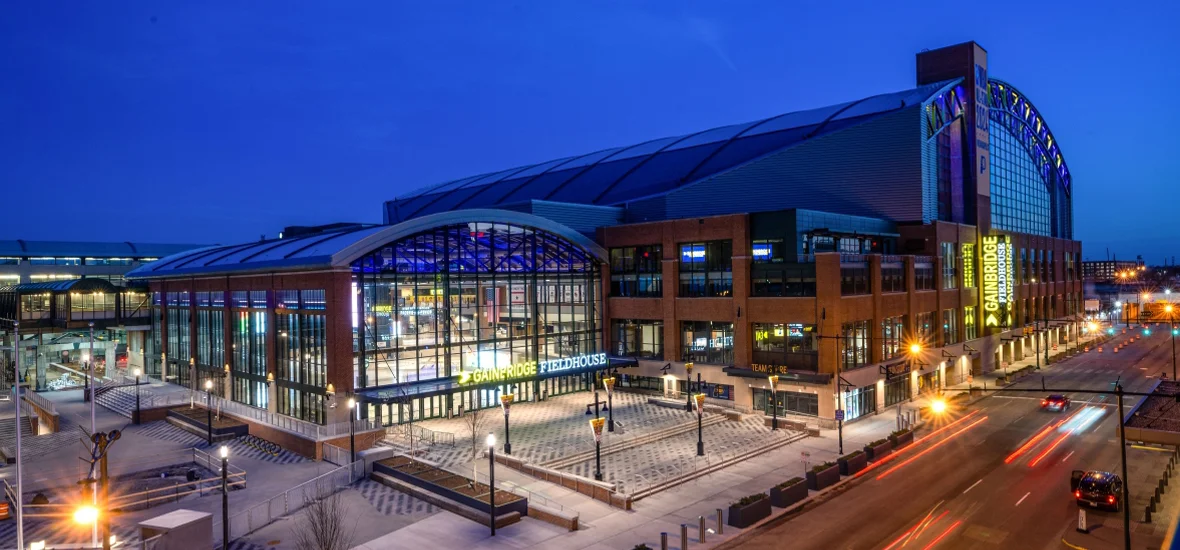
Pacers Sports & Entertainment has launched a new broadcast control center built on the SMPTE ST 2110 standard at Gainbridge Fieldhouse, underscoring how IP-based infrastructure is reshaping venue operations. By bringing video, graphics, and live content workflows under one centralized production hub, the organization is reducing complexity while gaining tighter control over the fan experience and the content pipeline that supports sponsorship inventory and premium engagement.
This is more than a technical upgrade. It reflects a broader shift in which venues are being designed to function as content factories, where every operational improvement can translate into more efficient production, more flexible programming, and greater monetization potential.
AI-managed connectivity is turning stadium Wi-Fi into a business asset
Atlético Madrid is upgrading the communications and Wi-Fi infrastructure at Riyadh Air Metropolitano Stadium through a multi-phase deployment of HPE Networking technology. With more than 1,500 next-generation access points planned, the project is aimed at far more than better fan connectivity.
The upgrade creates the foundation for richer analytics, more personalized digital services, and in-venue revenue opportunities that can be packaged for sponsors and commercial partners. In a market where data is increasingly as valuable as attendance, stadium networks are becoming strategic assets that can support both fan engagement and business intelligence.
Mixed-use stadium districts are becoming the new real estate strategy for clubs
Sporting Club Jacksonville has selected the St. Johns Town Center area for a proposed mixed-use sporting and entertainment district anchored by a new 15,000-seat soccer stadium. The move reflects a growing industry model in which clubs are no longer building standalone venues, but instead using stadium development to unlock broader real estate value around the asset.
By surrounding the stadium with residential, retail, dining, and entertainment components, teams can extend the economic impact of the venue far beyond matchdays. The result is a more durable development strategy that can attract investors, support year-round activity, and create a district-level business model rather than a single-purpose sports facility.
Private financing and year-round programming are redefining the soccer stadium playbook
Chicago Fire FC has broken ground on a privately funded $750 million, 22,000-seat stadium in the South Loop that will serve as the club’s permanent home in 2028. Designed by Gensler and tied to the broader The 78 development, the project is being positioned as a year-round revenue engine rather than a venue used primarily for matchdays.
Concerts, international matches, and other events are expected to help drive utilization and diversify income, reflecting a wider industry push to make stadiums financially productive across the calendar. Private capital is accelerating that trend by giving clubs more control over timelines, design priorities, and long-term revenue capture.
Global event production is becoming more standardized, more scalable, and more valuable
MLB Network is providing the host world-feed production and technical infrastructure for the 2026 World Baseball Classic across Miami, Houston, San Juan, and Tokyo. By standardizing the broadcast feed for rightsholders around the world, the network is helping create a more efficient distribution model that reduces production friction while improving consistency for international media partners.
That standardization has business implications well beyond operations. It expands the tournament’s commercial reach, improves the product delivered to broadcasters, and reinforces the value of centralized production in an increasingly global sports media market.
Across all of these developments, a common theme is emerging: venues are no longer being evaluated only by capacity or location. They are becoming data-rich, content-enabled, and commercially integrated platforms designed to generate value across multiple business lines.
Why It Matters
Stadium operators are increasingly treating technology as a business strategy rather than a support layer. From IP-based production and AI-managed connectivity to mixed-use real estate and standardized global event feeds, venues are being redesigned to generate more revenue, improve operational control, and expand commercial reach.
Content Package
This week in venue tech: Pacers centralize production with SMPTE ST 2110, Atlético upgrades AI-managed Wi-Fi for data-driven fan services, and new stadium districts (plus a year-round Chicago Fire build) point to the next monetization phase. #sportsvenue
#StadiumTech#SportsVenueTech#FanEngagement#SMPTE2110#SportsBusiness
This week’s signals from the stadium tech and business front point to one clear direction: fan monetization is moving from “matchday-only” to “always-on,” powered by IP control, AI-connected data platforms, and real-estate-grade development. 1) IP control for centralized, scalable production Pacers Sports & Entertainment deployed a broadcast control center built on SMPTE ST 2110 at Gainbridge Fieldhouse. The goal isn’t just better video—it’s operational scalability. By centralizing video, graphics, and live content production across NBA/WNBA and other events, the organization reduces workflow complexity while increasing control over the fan experience. 2) AI-managed connectivity turning stadiums into data platforms Atlético Madrid is upgrading connectivity at Riyadh Air Metropolitano Stadium with a multi-phase HPE Networking deployment targeting 1,500+ next-gen access points. Better Wi-Fi is becoming the foundation for analytics, digital fan services, and—critically—new sponsorship and in-venue revenue opportunities. 3) Stadiums as mixed-use catalysts Sporting JAX is positioning its future 15,000-seat soccer stadium within the St. Johns Town Center area, leaning into a mixed-use district model. This reflects a broader trend: venues are increasingly designed as real estate engines, not standalone facilities. 4) Year-round monetization baked into the build Chicago Fire FC broke ground on a privately financed $750M, 22,000-seat stadium in the South Loop, targeting 2028. With a plan tied to “The 78” development and designed for concerts, international matches, and more, it underscores how modern soccer stadiums are being built to diversify revenue beyond matchdays. 5) Global broadcast infrastructure standardization MLB Network is delivering host world-feed production and technical infrastructure for the 2026 World Baseball Classic across Miami, Houston, San Juan, and Tokyo. Standardizing the feed for rightsholders worldwide reduces production friction and improves consistency for international partners. Bottom line: the next phase of fan monetization blends technology (IP + connectivity + automation) with physical strategy (districts + year-round programming). The winners will be the organizations that treat venues as continuously managed platforms—where content, data, and experiences are orchestrated end-to-end. #SportsVenueTech #StadiumOperations #SMPTE2110 #VenueConnectivity #FanEngagement #SportsBusiness
#StadiumTech#SportsVenueTech#FanEngagement#SMPTE2110#SportsBusiness
Venue tech is leveling up 👇 IP-based production, AI-connected Wi-Fi, and stadium districts built for year-round revenue. The future of fan monetization is data + experience + real estate. 🏟️⚡️ #stadiumtech #sportsbiz #fanengagement #smpte2110 #ai #networking #mixeduse
#StadiumTech#SportsVenueTech#FanEngagement#SMPTE2110#SportsBusiness
This week’s Stadium Tech Report highlights how clubs are upgrading venues to drive new fan revenue. Pacers Sports & Entertainment centralized in-venue production with SMPTE ST 2110, Atlético Madrid is expanding AI-managed connectivity for data-driven fan services, and major projects like Sporting JAX’s district plan and Chicago Fire’s year-round stadium build show how stadiums are becoming monetization platforms beyond matchdays.
#StadiumTech#SportsVenueTech#FanEngagement#SMPTE2110#SportsBusiness
In just one week, stadiums are getting smarter—and more profitable. First: the Pacers are using SMPTE ST 2110 to centralize video production from a single broadcast hub. Less chaos, more control over the fan experience. Second: Atlético Madrid is upgrading Wi-Fi with an AI-managed approach—more access points means richer analytics and better digital services for fans and sponsors. Third: Sporting JAX is planning a mixed-use soccer district—stadiums are becoming real estate engines. Fourth: Chicago Fire is building a privately financed stadium designed for year-round events, not just matchdays. And finally: MLB Network is standardizing the World Baseball Classic broadcast backbone for global distribution. So what’s the takeaway? Tech + connectivity + smarter development = the next phase of fan monetization. Which move do you think matters most?
#StadiumTech#SportsVenueTech#FanEngagement#SMPTE2110#SportsBusiness
Here are 5 big stadium tech + business moves from this week—and what they mean for fan monetization. 1) Pacers: SMPTE ST 2110 broadcast control center at Gainbridge Fieldhouse. Centralized production means scalable, consistent in-venue content. 2) Atlético Madrid: AI-managed connectivity upgrades at Riyadh Air Metropolitano. More access points = stronger analytics + better digital fan services. 3) Sporting JAX: a mixed-use soccer district plan anchored by a new 15,000-seat stadium. Stadiums are becoming part of the community economy. 4) Chicago Fire: privately financed $750M stadium built for year-round monetization—concerts, international matches, and more. 5) MLB Network: standardized world-feed infrastructure for the 2026 World Baseball Classic across multiple countries. Net-net: venues are shifting from “matchday venues” to “always-on platforms” powered by IP, connectivity, and development strategy. Follow for more stadium tech updates.
#StadiumTech#SportsVenueTech#FanEngagement#SMPTE2110#SportsBusiness
Stadium tech is going from “support” to “revenue engine.” From SMPTE 2110 control centers to AI-managed Wi‑Fi and mixed-use districts, clubs are monetizing smarter—fan experience, sponsorship, and year-round events included. 📡🏟️
#StadiumTech#SportsBusiness#VenueInnovation
Venue technology is shifting from a backstage function to a direct driver of revenue. Pacers Sports & Entertainment’s new SMPTE ST 2110 broadcast control center at Gainbridge Fieldhouse is a clear signal: centralized, software-driven production is tightening control over the fan experience while strengthening the content pipeline—especially as premium engagement and sponsorship opportunities depend on faster, more consistent distribution. Meanwhile, Atlético Madrid’s HPE Networking upgrade at Riyadh Air Metropolitano Stadium shows how connectivity is evolving into a commercial asset. AI-managed Wi‑Fi isn’t just “better service”—it’s the foundation for richer analytics, personalized digital services, and sponsor-ready data/experiences that can be packaged and commercialized. On the real estate side, Sporting Club Jacksonville’s planned mixed-use sporting and entertainment district reflects a broader model: clubs are no longer building isolated venues. They’re using stadium development to unlock residential, retail, dining, and entertainment value around the asset—turning the venue into a multi-use economic hub. Chicago Fire FC is taking the year-round revenue playbook further with a privately funded $750M, 22,000-seat stadium tied to The 78 development. The message is consistent across leagues: stadiums must monetize beyond matchdays—through concerts, international events, and scalable programming. Finally, MLB Network’s standardized host world-feed for the 2026 World Baseball Classic highlights the commercial upside of consistency and scalability. By reducing production friction and improving media partner reliability, standardization expands reach and strengthens international monetization. Bottom line: IP-based production, intelligent connectivity, mixed-use planning, and standardized event infrastructure are converging. The next competitive advantage in stadiums won’t just be what fans see—it’ll be how quickly and profitably venues can turn operations into experiences. #StadiumTech #SportsBusiness #VenueOperations #BroadcastEngineering #Sponsorship #DigitalFanExperience
#StadiumTech#SportsBusiness#VenueInnovation
Stadiums are leveling up—tech is now a revenue engine. 📡 SMPTE 2110 control rooms, AI-managed Wi‑Fi, mixed-use districts, and year-round event models. What’s your favorite upgrade? 🏟️✨ #StadiumTech #SportsBusiness #VenueInnovation #BroadcastTech #WiFi #FanExperience #Sponsorship #EventProduction
#StadiumTech#SportsBusiness#VenueInnovation
Big shift in stadiums: technology is moving beyond support roles and becoming a revenue engine. From centralized SMPTE ST 2110 production for tighter fan content control, to AI-managed Wi‑Fi that enables personalized digital services and sponsor value—clubs are investing in smarter operations. Add mixed-use development and year-round programming, and venues are becoming destinations that monetize all year long. What do you think is the next biggest tech win for stadiums?
#StadiumTech#SportsBusiness#VenueInnovation
In the past, stadium tech was “nice to have.” Now it’s a money-maker. Example 1: Pacers Sports & Entertainment built a broadcast control center using SMPTE ST 2110—so video, graphics, and live content run from one place. Faster, cleaner, and more sponsor-ready. Example 2: Atlético Madrid is upgrading Wi‑Fi with next-gen access points and AI-managed connectivity. That means better experiences AND data insights clubs can package for partners. And it’s not just tech. Clubs are rethinking the venue itself—mixed-use districts and stadiums designed for year-round events. So the question is: is your stadium treating tech like a cost center… or a revenue engine?
#StadiumTech#SportsBusiness#VenueInnovation
Stadium tech is evolving fast—from support function to revenue engine. Here’s what’s driving the change: 1) Centralized IP production: Pacers Sports & Entertainment rolled out a broadcast control center using SMPTE ST 2110. One hub for video + graphics + live content means tighter control of the fan experience. 2) AI-managed connectivity: Atlético Madrid is deploying next-gen Wi‑Fi tech to power analytics and personalized digital services—turning connectivity into a commercial asset. 3) Stadiums built to monetize year-round: mixed-use districts and privately funded venues are designed for concerts, international matches, and more—not just game days. 4) Standardized event production: MLB Network supports the 2026 World Baseball Classic with standardized world-feed infrastructure across multiple cities, improving consistency and commercial reach. Bottom line: the best venues won’t just entertain—they’ll convert operations into revenue. Do you think IP production or AI Wi‑Fi will matter more next?
#StadiumTech#SportsBusiness#VenueInnovation
Venue tech has moved from back-of-house to core strategy: IP-based production, AI-managed Wi‑Fi, mixed-use districts, and year-round events are turning stadiums into content + data revenue engines. #StadiumTech
#StadiumTech#SportsBusiness#VenueInnovation#IPBroadcast#SmartStadium#SportsMedia
Venue technology is no longer a “nice-to-have” operational upgrade—it’s becoming a core revenue driver. Across arenas, stadiums, and international events, operators are redesigning venues as commercially integrated platforms where connectivity, production, and real estate strategy work together to unlock new income streams. Key shifts shaping the business case: 1) IP-based production as a control point for efficiency + monetization Pacers Sports & Entertainment’s SMPTE ST 2110-based broadcast control center at Gainbridge Fieldhouse shows how centralizing video, graphics, and live workflows can reduce complexity while tightening control of the fan experience. That control matters commercially: faster, more flexible content pipelines support sponsorship inventory, premium engagement, and more consistent delivery. 2) AI-managed connectivity turning Wi‑Fi into a strategic asset Atlético Madrid’s multi-phase Riyadh Air Metropolitano Stadium upgrade—planned to include 1,500+ next-gen access points—goes beyond “better Wi‑Fi.” It creates a foundation for analytics, personalization, and sponsor-ready digital services. In an environment where data is monetized, stadium networks become business intelligence infrastructure. 3) Mixed-use stadium districts as the new real estate playbook Sporting Club Jacksonville’s proposed mixed-use district anchored by a 15,000-seat soccer stadium reflects a broader model: clubs aren’t only building venues, they’re engineering districts that generate year-round economic value. Residential, retail, dining, and entertainment components shift the stadium from single-purpose asset to district-level platform. 4) Private financing + year-round programming redefining the soccer stadium model Chicago Fire FC’s privately funded $750M, 22,000-seat stadium in the South Loop is designed to function as a year-round revenue engine. Concerts, international matches, and other events expand utilization and diversify income—while private capital accelerates control over timelines and long-term revenue capture. 5) Global event production becoming standardized and scalable MLB Network’s host world-feed infrastructure for the 2026 World Baseball Classic highlights why standardization matters. A consistent broadcast feed improves distribution efficiency, reduces friction for international partners, and strengthens global commercial reach. The common thread: venues are being evaluated less by capacity alone and more by how effectively they generate value across multiple business lines—data, content, partnerships, and real estate. As venue tech continues to evolve, the winners will be the operators who treat technology and infrastructure as revenue infrastructure—not just operational support.
#StadiumTech#SportsBusiness#VenueInnovation#IPBroadcast#SmartStadium#SportsMedia
Stadiums aren’t just seats anymore—IP production, AI Wi‑Fi, mixed-use districts, and year-round programming are turning venues into data + content revenue engines. 📲🎥🏟️ #StadiumTech #SportsBusiness #VenueInnovation #IPBroadcast #SmartStadium #SportsMedia #Connectivity #AIinSports
#StadiumTech#SportsBusiness#VenueInnovation#IPBroadcast#SmartStadium#SportsMedia
Venue technology is evolving into a core revenue driver. From IP-based broadcast control centers and AI-managed connectivity to mixed-use stadium districts and privately financed, year-round venues—operators are redesigning stadiums as content factories and data-rich commercial platforms. The result: more monetization opportunities, streamlined operations, and stronger value beyond matchdays.
#StadiumTech#SportsBusiness#VenueInnovation#IPBroadcast#SmartStadium#SportsMedia
Venues used to be judged by capacity and location… now they’re judged by revenue tech. In 30 seconds: 1) IP-based production is centralizing video + graphics so content pipelines are faster—and easier to monetize. 2) AI-managed Wi‑Fi turns connectivity into analytics, personalization, and sponsor-ready digital services. 3) Mixed-use stadium districts expand value beyond game day with year-round retail, dining, and entertainment. 4) Private financing + year-round programming makes stadiums active all calendar long. 5) Global event production is standardizing feeds to scale international media reach. Bottom line: stadiums are becoming data-rich, content-enabled business platforms. 🏟️📲🎥
#StadiumTech#SportsBusiness#VenueInnovation#IPBroadcast#SmartStadium#SportsMedia
Stadium tech is no longer backstage—it’s big business. Here’s what’s changing: IP-based production: venues are building centralized control rooms (think SMPTE ST 2110) to streamline workflows and monetize content faster. AI-managed connectivity: next-gen Wi‑Fi becomes a data engine—supporting analytics, personalization, and sponsor value. Mixed-use districts: clubs are turning one stadium into a whole neighborhood—year-round activity, more investor interest. Private financing: new stadiums are designed for utilization beyond matchdays—concerts, international events, diversified income. Global standardization: standardized world-feed production helps tournaments scale commercially across countries. So the question isn’t “How many seats?” It’s “How many revenue lines can the venue power?”
#StadiumTech#SportsBusiness#VenueInnovation#IPBroadcast#SmartStadium#SportsMedia