Bruce Pearl’s UNC critique exposes college basketball’s new bottom line: loyalty is now a business decision
Bruce Pearl’s reaction to North Carolina’s decision to part ways with Hubert Davis was less about one coaching change than about the economics reshaping college basketball. In an era defined by NIL, donor pressure, media value, and instant performance demands, tradition increasingly takes a back seat to revenue, results, and brand protection.
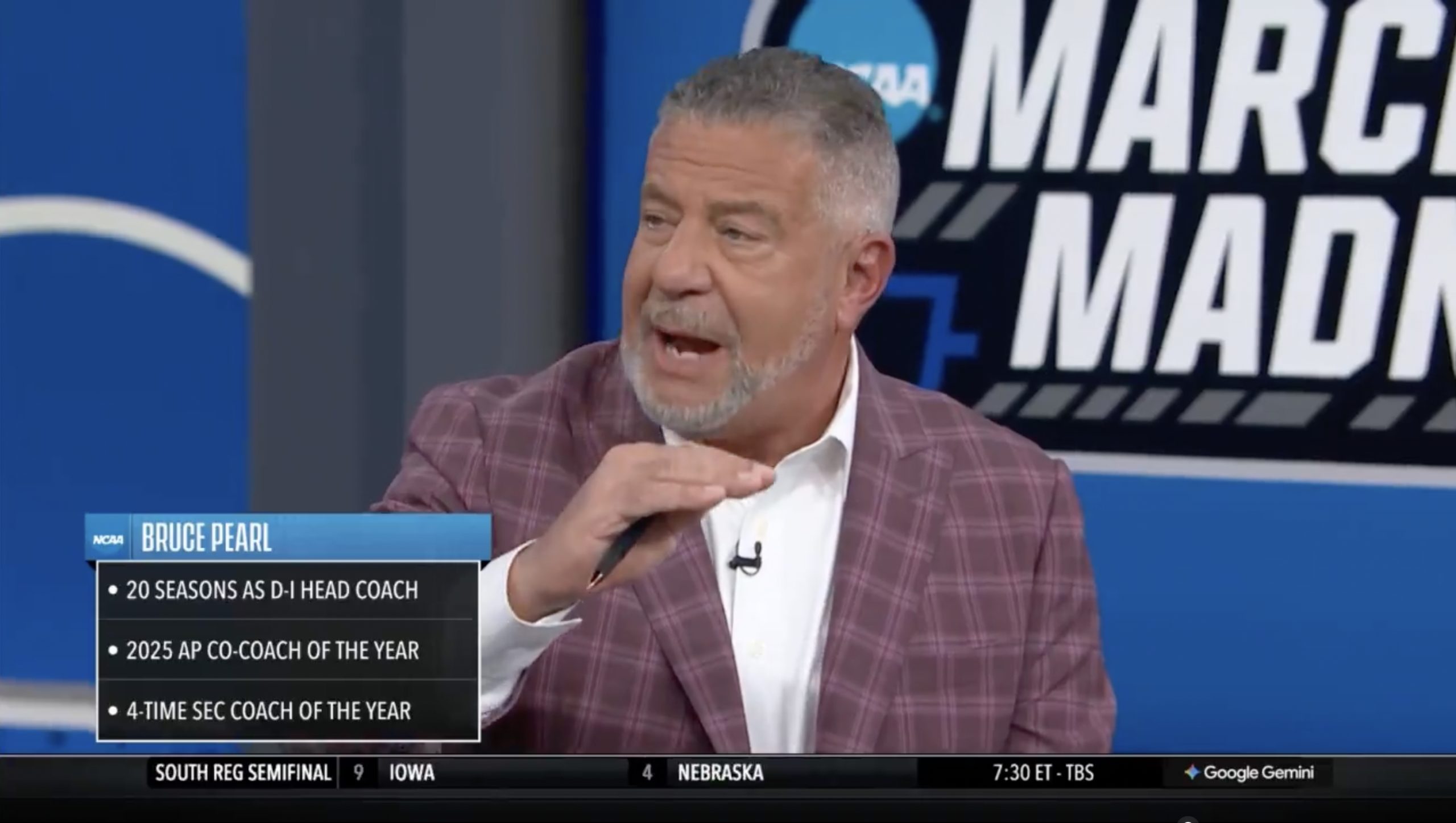
Bruce Pearl’s reaction to North Carolina’s decision to move on from Hubert Davis was more than a defense of a respected coach. It was a blunt reminder that college basketball’s most powerful programs are now operating under a business model where sentiment has limited value and performance carries immediate financial consequences.
Pearl argued that the sport has lost its sense of loyalty. But the more important reality is that blue-blood programs have become high-stakes entertainment businesses, shaped by television exposure, booster expectations, recruiting economics, and NIL competition. In that environment, even a former star player and longtime program figure can become replaceable if the results no longer justify the investment.
“I just hate hearing the words ‘Hubert Davis was fired at UNC,’” Pearl said. “That sentence right there bothers me to my core. Because if Hubert Davis, who has had such a great career, and [Jalen Rose], to your point, with his character and everything like that, can let go because he didn’t win enough when his best player got hurt?”
He added: “That’s why I’m sitting here, guys. That’s part of the reason why I’m sitting here. Because there is no loyalty anymore.”
There is no question that Davis’ departure carries emotional weight. He was a beloved former Tar Heel and was given five seasons to lead one of the most valuable brands in college basketball. But North Carolina is not in the business of preserving nostalgia. It is in the business of maximizing wins, tournament success, national relevance, and the kind of competitive credibility that keeps its donor base engaged.
That is the disruptive shift. In today’s college basketball economy, underperformance is not simply a coaching issue; it is a business risk. For elite programs, a disappointing season can affect NIL momentum, donor confidence, recruiting leverage, and long-term brand equity. A tournament setback can now trigger a decision that once might have been delayed for years.
Pearl’s comments also highlighted the contradictions at the center of this new era. His own career has been shaped by the same transactional logic he criticized. He was dismissed at Tennessee amid an NCAA ethical conduct case, rebuilt his standing at Auburn, and later stepped away after an elite run that included a Final Four appearance. He has also acknowledged that his son Steven benefited from nepotism during Auburn’s coaching transition.
That history does not erase the emotional force of Pearl’s loyalty argument. But it does sharpen the larger point: in modern college basketball, value determines opportunity. Coaches are retained when they help a program win, raise money, and protect the brand. When they do not, loyalty becomes a luxury rather than a guarantee.
The business reality is clear. College basketball still trades heavily on legacy, but legacy now lasts only as long as it aligns with revenue, results, and the demands of a rapidly commercializing sport.
Why It Matters
Bruce Pearl’s reaction to North Carolina’s decision to part ways with Hubert Davis was less about one coaching change than about the economics reshaping college basketball. In an era defined by NIL, donor pressure, media value, and instant performance demands, tradition increasingly takes a back seat to revenue, results, and brand protection.
Content Package
Bruce Pearl’s UNC critique hits harder than a coaching hot take: in today’s college hoops, “loyalty” ends where media value, NIL, donors, and winning intersect. Underperformance isn’t just basketball—it’s business risk.
#CollegeBasketball#SportsBusiness#NIL
Bruce Pearl’s reaction to North Carolina moving on from Hubert Davis wasn’t only about one program’s decision—it was a snapshot of where college basketball is headed. Pearl essentially argued that the sport has lost loyalty: coaches can be dismissed despite deep ties, reputation, and the emotional logic fans associate with “blue-blood” programs. But the more revealing point is that top programs increasingly operate like entertainment brands—where sentiment is secondary to outcomes, positioning, and revenue. Today’s calculus isn’t just wins and losses. It’s whether a coach can: • protect national brand equity • sustain donor confidence • maintain recruiting leverage • accelerate NIL momentum • deliver tournament credibility that drives media value In this model, underperformance becomes a business risk with ripple effects. A tournament collapse can shift internal expectations quickly, turning what used to be a “wait-and-see” moment into an immediate strategic change. There’s also a contradiction in the era Pearl is critiquing. His own career shows how transactional logic still shapes opportunity: coaching exits, reputation rebuilds, and the reality that value drives retention. That doesn’t remove the emotional force of his “there is no loyalty anymore” argument—it makes it more complex. Loyalty may still exist in the culture, but it no longer guarantees job security. The bottom line: college basketball still runs on legacy, but legacy only lasts until it conflicts with performance and the economics of a rapidly commercializing sport. Pearl’s comments underscore a new reality—coaches are retained when they win and when they protect the business case for the program. What do you think—should programs prioritize long-term development and loyalty, or is this shift inevitable in modern college athletics?
#CollegeBasketball#SportsBusiness#NIL
UNC moves on from Hubert Davis—Bruce Pearl says it shows there’s “no loyalty anymore.” In 2026, college hoops runs on wins + media value + NIL momentum. Loyalty? Optional. #CollegeBasketball #UNC #BrucePearl #HubertDavis #NIL #SportsBusiness #BasketballAnalysis #BlueBloods
#CollegeBasketball#SportsBusiness#NIL
Bruce Pearl didn’t hold back after UNC’s decision to move on from Hubert Davis. His message: college basketball’s new era is driven less by loyalty and more by the business realities of winning, donor confidence, NIL momentum, and media value. Underperformance now carries financial consequences—making coaching changes faster than fans expect.
#CollegeBasketball#SportsBusiness#NIL
Bruce Pearl called out UNC’s decision to move on from Hubert Davis—and he went viral for a reason. He basically said, “There’s no loyalty anymore.” Here’s the real story: college basketball isn’t just about tradition anymore. It’s an entertainment business. Programs like UNC are judged by results, tournament success, TV relevance, donor confidence, and NIL momentum. So when a coach doesn’t deliver—especially after a season that doesn’t match expectations—the job can become a business risk, not just a performance evaluation. Pearl’s point hits emotionally, but the shift is bigger: legacy still matters… until it conflicts with revenue and brand value. What do you think—should loyalty win, or are these changes inevitable in modern college hoops?
#CollegeBasketball#SportsBusiness#NIL
Bruce Pearl is talking about loyalty—and UNC’s decision to move on from Hubert Davis is the spark. Pearl said the sentence “Hubert Davis was fired at UNC” bothers him because he believes loyalty should matter. But the bigger point is that college basketball’s economics have changed. Top programs aren’t just building teams; they’re protecting brands. That means coaches are evaluated on wins, tournament performance, TV/media value, donor confidence, recruiting leverage, and NIL momentum. So when results slip, it’s not only a basketball issue—it becomes a business problem. A tournament collapse can accelerate decisions that might once have been delayed. And Pearl’s own career history shows the same truth: opportunity follows value. Legacy lasts… until it doesn’t. Do you think schools should prioritize loyalty longer, or is this the new normal?
#CollegeBasketball#SportsBusiness#NIL
Bruce Pearl’s UNC critique lands hard: college hoops loyalty is fading—because programs now run like entertainment businesses. If results don’t justify the investment, even beloved coaches can be replaced fast. #CBB
#CollegeBasketball#SportsBusiness#NIL
Bruce Pearl didn’t just react to North Carolina moving on from Hubert Davis—he highlighted a structural shift in college basketball. His point about “no loyalty anymore” is emotional, but the underlying reality is financial. Blue-blood programs increasingly operate under a business model where sentiment has limited value and performance creates immediate consequences. Television exposure, booster expectations, recruiting economics, and NIL competition all tighten the link between on-court outcomes and off-court revenue. In that environment, coaching becomes a risk-management decision. UNC may have invested in Davis for five seasons with a storied brand and a respected figure at the helm—but if results fall short, the consequences extend beyond wins and losses: • NIL momentum can stall • donor confidence can weaken • recruiting leverage can erode • brand equity can lose relevance in a crowded, fast-commercializing market Pearl’s comments also underscore the era’s contradictions. His own career has been shaped by the same transactional logic he criticized—being dismissed, rebuilding, and ultimately benefiting from the competitive and reputational cycles that modern programs reward. The bigger takeaway: loyalty still exists in college basketball’s culture, but it’s no longer a guarantee. In the new bottom line, value determines opportunity. Coaches are retained when they drive results and protect the business case—wins, credibility, and confidence across stakeholders. College basketball can still trade on legacy. But in today’s economy, legacy lasts only as long as it aligns with revenue, results, and the market’s expectations. #CollegeBasketball #SportsBusiness #NIL #Coaching #AthleticsManagement
#CollegeBasketball#SportsBusiness#NIL
Loyalty vs. the bottom line in college hoops? Bruce Pearl says it best: UNC moving on from Hubert Davis shows sentiment has limits—results drive the business. #CollegeBasketball #SportsBusiness #NIL #CoachingCarousel #BasketballNews #UNC #Auburn #BrucePearl
#CollegeBasketball#SportsBusiness#NIL
Bruce Pearl isn’t mincing words about UNC’s decision to move on from Hubert Davis. In his view, college basketball has lost loyalty—and the real driver now is business. With NIL, boosters, recruiting economics, and TV exposure all tied to performance, underachievement can trigger fast decisions. What do you think: is this the new normal in college hoops?
#CollegeBasketball#SportsBusiness#NIL
Bruce Pearl just dropped a brutal take on college basketball: “There is no loyalty anymore.” UNC moving on from Hubert Davis wasn’t just emotional—it’s business. In today’s college hoops economy, programs aren’t preserving nostalgia. They’re protecting revenue. If results slip, it can hit NIL momentum, donor confidence, recruiting leverage, and brand value—fast. So even beloved coaches can be replaced when the investment no longer pays off. Pearl’s message? Loyalty is now a performance-based decision. Do you agree college basketball has become too transactional? Comment “LOYALTY” or “BUSINESS.”
#CollegeBasketball#SportsBusiness#NIL
Bruce Pearl says UNC’s coaching shakeup proves one thing: college basketball loyalty is gone. Here’s why. Programs like UNC now operate like high-stakes entertainment businesses—TV exposure, boosters, recruiting economics, and NIL competition all depend on performance. So when a coach doesn’t deliver wins—especially when injuries hit and seasons don’t land—underperformance becomes a financial risk, not just a basketball issue. Pearl put it simply: if Hubert Davis can be let go, then loyalty can’t be guaranteed anymore. In the new era, legacy lasts only as long as it matches the bottom line. Do you think this is fair—or is it killing the tradition of college hoops?
#CollegeBasketball#SportsBusiness#NIL