Why the Argentina-Spain Finalissima Was Canceled: A Case Study in Global Football Risk
The Argentina vs. Spain Finalissima 2026 was positioned as a marquee global football event, but it was ultimately canceled after security and logistical concerns tied to the geopolitical situation in the Middle East made the match impossible to stage as planned. Efforts to relocate or reschedule the fixture failed, exposing how quickly even elite international properties can be derailed by external risk. For governing bodies and commercial partners, the cancellation is a reminder that premium events now depend as much on geopolitical stability as on sporting demand.
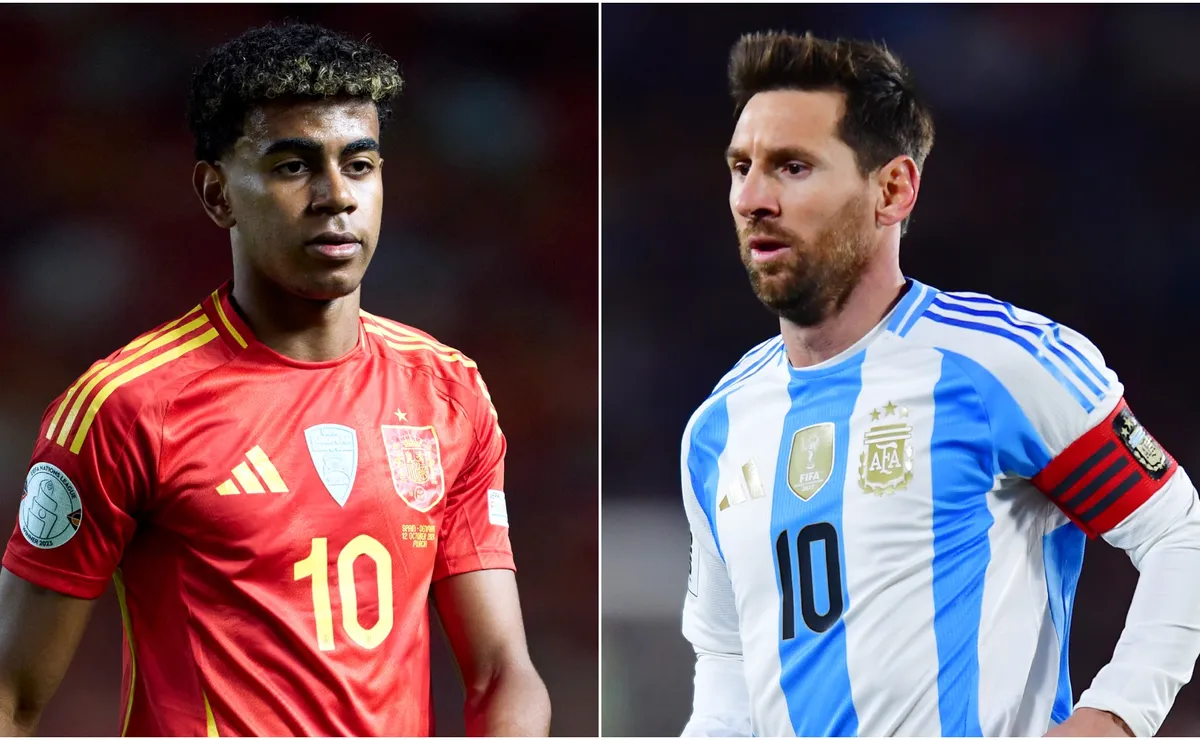
The Argentina vs. Spain Finalissima 2026 was supposed to be one of international football’s most marketable events: a champion-versus-champion showcase built around two of the sport’s biggest brands and a generational storyline linking Lionel Messi with Lamine Yamal. For broadcasters, sponsors, and host-market stakeholders, the fixture represented the kind of rare, high-value inventory that can command global attention well beyond the pitch.
Instead, the match will not be played on March 27, turning what had been a premium event into a cautionary example of how fragile elite sports scheduling can be. The cancellation has underscored a hard business reality: even the most compelling product can be neutralized when security, logistics, and geopolitics collide.
The Argentina vs. Spain Finalissima 2026 clash was officially canceled after security and logistical concerns linked to the geopolitical situation in the Middle East, combined with unsuccessful attempts to relocate or reschedule the fixture.
Why the Finalissima was canceled
According to UEFA, the match could not be staged as planned in Qatar because of the current political situation in the region. The original venue, Lusail Stadium, had been selected for its world-class infrastructure and proven ability to host major international events, but broader instability created unacceptable operational risk.
Travel disruption, airspace restrictions, and the difficulty of guaranteeing the safety of players, officials, and supporters made the event commercially and operationally untenable. For organizers, the decision to cancel rather than force a compromised staging reflects a growing trend in global sports: risk management is now a central part of event strategy, not an afterthought.
That shift matters because the Finalissima was not simply another friendly. It was a premium, one-off property designed to generate international interest, strengthen federation visibility, and deliver value to commercial partners looking for a globally resonant football moment.
Failed rescue attempts exposed scheduling and governance friction
Before the cancellation became final, organizers explored several alternatives to preserve the event. Proposals reportedly included moving the match to the Santiago Bernabeu, staging a two-legged format between Madrid and Buenos Aires, or shifting the game to a neutral European venue.
None of those options gained traction. Scheduling conflicts, venue neutrality concerns, and disagreements between the federations made compromise difficult, while Spain’s crowded calendar and Argentina’s preferred conditions added further complexity. The collapse of those talks highlights a recurring issue in international football: the commercial appeal of a match does not guarantee institutional alignment behind it.
That misalignment has business consequences. When federations cannot agree on venue, timing, or competitive balance, the result is not just a missed game — it is lost media inventory, disrupted sponsorship activation, and diminished momentum for a property that had been marketed as a rare global showcase.
Spain’s head coach acknowledged the frustration surrounding the failed negotiations, noting that the intention had been to play the match. The comment reflected a broader truth: in modern football, even the strongest sporting demand can be overridden by governance friction and external instability.
What happens next for Spain and Argentina
With the Finalissima off the table, both national teams have moved on to alternative March fixtures. Spain will face Serbia as part of its preparation for the World Cup cycle, while Argentina will continue through friendlies against Mauritania and Zambia.
From a sporting perspective, those matches still offer competitive value. From a business perspective, however, they are a downgrade from the scale and visibility of a Spain-Argentina showdown. The cancellation leaves broadcasters, sponsors, and event planners without a premium international asset that could have delivered exceptional engagement across multiple markets.
The bigger lesson is structural. Global football increasingly relies on cross-border showcase events to expand audience reach, monetize star power, and deepen commercial relationships. But the Finalissima cancellation shows that the economics of these events are only as stable as the political and logistical environment around them.
For the industry, that makes contingency planning, venue flexibility, and federation cooperation more important than ever. The failed Finalissima is not just a scheduling miss; it is a reminder that the next frontier in sports business is not only growth, but resilience.
Why It Matters
The Argentina vs. Spain Finalissima 2026 was positioned as a marquee global football event, but it was ultimately canceled after security and logistical concerns tied to the geopolitical situation in the Middle East made the match impossible to stage as planned. Efforts to relocate or reschedule the fixture failed, exposing how quickly even elite international properties can be derailed by external risk. For governing bodies and commercial partners, the cancellation is a reminder that premium events now depend as much on geopolitical stability as on sporting demand.
Content Package
The Argentina-Spain Finalissima 2026 is canceled over security/logistics tied to Middle East geopolitics—turning a “must-watch” global product into a risk-management case study for football business. #FootballBusiness
#FootballBusiness#SportsRiskManagement#InternationalFootball#UEFA#Sponsorship
The cancellation of the Argentina–Spain Finalissima 2026 is a sharp reminder that elite football is increasingly a global business operating inside real-world uncertainty. What was supposed to be a premium, champion-versus-champion showcase—built for broadcasters, sponsors, and host-market stakeholders—was ultimately neutralized by security and logistical concerns linked to the geopolitical situation in the Middle East. UEFA cited the inability to stage the match in Qatar due to current political conditions, and reported that attempts to relocate or reschedule did not succeed. From a sports-business perspective, this matters for three reasons: 1) Risk management is now core strategy This wasn’t a routine scheduling hiccup. Travel disruption, airspace restrictions, and safety guarantees made the event commercially and operationally untenable. The decision to cancel rather than “force” a compromised staging reflects a broader trend: managing external risk is becoming central to how events are planned and valued. 2) Commercial appeal doesn’t override governance friction Before the cancellation became final, organizers explored alternatives—moving to the Santiago Bernabéu, considering a two-legged format, or shifting to another neutral venue. Yet scheduling conflicts, venue neutrality concerns, and federation disagreements prevented alignment. In modern international football, institutional coordination is as important as marketability. 3) Lost media inventory has real downstream costs When elite showcases fall through, the impact goes beyond one missed match. Broadcasters lose high-value inventory, sponsors lose activation windows, and federations lose momentum from a globally resonant product. What happens next? Spain and Argentina move on to alternative March fixtures (Spain vs. Serbia; Argentina friendlies vs. Mauritania and Zambia). While those games still deliver sporting value, they don’t replicate the scale of a Spain–Argentina Finalissima storyline. The bigger lesson for the industry: cross-border “showcase” events are a growth engine—but their economics are only as stable as the political, logistical, and cooperative environment around them. Resilience, contingency planning, and federation alignment are no longer optional. #FootballBusiness #SportsRisk #InternationalFootball #UEFA #Sponsorship #SportsMedia
#FootballBusiness#SportsRiskManagement#InternationalFootball#UEFA#Sponsorship
A global football blockbuster got canceled—here’s the business lesson: risk + geopolitics can override even the biggest matchups. ⚽️🌍 #FootballBusiness #SportsMedia #RiskManagement #InternationalFootball #UEFA #Sponsorship #Finalissima
#FootballBusiness#SportsRiskManagement#InternationalFootball#UEFA#Sponsorship
⚽️ The Argentina–Spain Finalissima 2026 has been canceled. UEFA says security and logistical concerns tied to the geopolitical situation in the Middle East made staging the match in Qatar impossible, and relocation options didn’t work. It’s a reminder that elite football events depend not just on stars and storylines—but also on safety, travel access, and federation cooperation. Spain and Argentina will play alternative March fixtures instead.
#FootballBusiness#SportsRiskManagement#InternationalFootball#UEFA#Sponsorship
In 30 seconds: why was the Argentina–Spain Finalissima 2026 canceled? It was set up as a massive global showcase—champion vs champion, Messi-to-Lamine Yamal hype, premium TV and sponsor value. But UEFA says the match couldn’t be staged in Qatar due to the current political situation in the region. That meant unacceptable operational risk—think security concerns, travel disruption, and airspace restrictions. They tried to save it: moving venues, even changing the format—but scheduling conflicts and federation friction killed the options. Bottom line: in global football, stars aren’t enough—risk management and governance alignment are everything. #FootballBusiness #RiskManagement
#FootballBusiness#SportsRiskManagement#InternationalFootball#UEFA#Sponsorship
Why was the Argentina–Spain Finalissima 2026 canceled? Here’s the quick breakdown. This match was marketed as one of football’s most marketable events: big brands, big storylines, and huge value for broadcasters and sponsors. But UEFA confirmed it can’t be played in Qatar due to security and logistical concerns linked to the geopolitical situation in the Middle East. And it wasn’t just paperwork—operational risk became too high: safety could not be guaranteed, travel was disrupted, and airspace restrictions made staging impractical. Before the final decision, organizers explored alternatives—like moving to the Bernabéu or adjusting the format—but negotiations didn’t land. So the lesson for sports business: the next frontier isn’t only growth—it’s resilience when external risk hits. #Finalissima #FootballBusiness #SportsRisk
#FootballBusiness#SportsRiskManagement#InternationalFootball#UEFA#Sponsorship