
Sports Venture Capital
Investment trends, startup funding rounds, acquisitions, and the capital flowing into sports innovation.
20 articles

OpenAI’s Deal Spree Signals How AI Leaders Are Turning M&A Into a Competitive Moat
OpenAI is accelerating acquisitions at a pace that underscores a bigger shift in generative AI: product advantage alone is no longer enough. By buying developer tools, workflow software, and specialized talent, the company is building a broader platform and trying to lock in long-term market power. The strategy is being fueled by massive capital access, but it also highlights the economics of the AI race, where even the best-funded leaders may need acquisitions to stay ahead. In a crowded market, consolidation is becoming as important as innovation.

LiteLLM’s Security Breach Exposes the Business Risk Hiding Inside AI Infrastructure
LiteLLM’s malware incident is a reminder that the fastest-growing layers of AI infrastructure can become some of the most dangerous liabilities. For enterprises and investors, the episode underscores how supply-chain security, compliance optics, and vendor trust are now central to AI adoption.

ByteDance Brings AI Video Creation Into CapCut, Raising the Pressure on Sports Content Workflows
ByteDance is embedding its Dreamina Seedance 2.0 model into CapCut, signaling a major step toward AI-native video production at scale. For sports organizations, the move could compress production timelines, lower content costs, and intensify competition for fast, platform-ready storytelling.

Aetherflux’s $2 Billion Valuation Signals Space Is Becoming the Next AI Infrastructure Arms Race
Aetherflux is reportedly seeking a Series B that could value the space solar power startup at $2 billion, underscoring how aggressively capital is flowing into the infrastructure layer behind AI. The company’s pivot toward space-based data centers suggests investors are beginning to price orbit as a future compute market, not just a science experiment.

Netflix’s Price Hike Shows Streaming Is Entering Its Monetization Era
Netflix’s latest pricing move underscores a broader shift in streaming: the industry is no longer chasing subscribers at all costs, but pushing harder to extract more revenue from the audiences it already has. By raising plan prices and tightening rules around account sharing, the company is signaling that scale is now a pricing weapon, not just a growth story.

Senators Turn Up the Heat on Data Centers as Power Costs and Grid Strain Hit the Sports Tech Stack
Two U.S. senators are pushing for mandatory annual reporting on data center energy use, signaling a tougher regulatory era for one of the most power-hungry sectors in the AI economy. For sports business, the move could reshape the cost structure behind streaming, betting, fan analytics, and other digital products that depend on data center capacity.
Aetherflux’s $2 Billion Valuation Signals Space Infrastructure Is Turning Into a Serious Commercial Bet
Aetherflux’s reported push toward a $2 billion valuation underscores how quickly space infrastructure is shifting from science experiment to investable business model. The company’s pivot toward orbital data centers reflects rising demand for energy-intensive compute and a broader race to build commercial infrastructure beyond Earth.

OpenAI’s Sora Pullback Shows the Economics Behind the AI Entertainment Hype
OpenAI is shutting down Sora, its standalone video app, social layer, and API access, signaling a sharp pivot away from consumer entertainment and toward higher-value enterprise and infrastructure bets. The move underscores how expensive generative video can be to operate and how quickly platform strategies can change when monetization, compute costs, and competitive pressure collide.

Security, Privacy and AI Infrastructure Keep Drawing Capital as Funding Cools
Startup funding slowed last week, but investor capital continued to concentrate around the same high-priority themes reshaping the tech economy: security, privacy and the infrastructure needed to support AI at scale. The largest rounds suggest a market rewarding businesses that reduce risk, protect data and solve the physical bottlenecks behind next-generation computing.
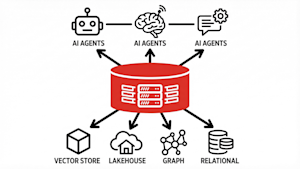
Oracle’s AI database strategy points to a new control layer for enterprise infrastructure
Oracle is making a bold bid to move agentic AI closer to the core of enterprise operations by embedding more intelligence directly into the database. The strategy challenges the fragmented stack of vector stores, graph systems and lakehouses that many companies now rely on, and could reshape where control, compliance and speed live in the AI era.

Google’s TurboQuant shows how software could slash AI infrastructure costs and reshape the economics of sports tech
Google Research’s TurboQuant algorithm is a software-only breakthrough that compresses AI memory use by roughly 6x on average and boosts attention computation speed by up to 8x, with the potential to cut inference costs by more than half. For sports organizations betting on AI for scouting, content, fan engagement, and internal operations, the bigger story is not just performance — it is a shift in the economics of deploying large models at scale.
Capital Is Cooling, But Security and AI Keep Winning the Checkbook
Startup funding eased this week, but the biggest rounds still flowed toward companies building the backbone of a more defensive, automated digital economy. Security, privacy, and AI infrastructure attracted the most capital, signaling that investors are narrowing in on technologies with clear enterprise value and long-term resilience.